What happens when you feed a puffer too large a snail?
Forum rules
Read this before posting!!
Since this board has been up, we have found there are several questions that routinely get asked in order to help diagnose problems. If you can have that information to begin with in your post, we'll be able to help right away (if we can!) without having to wait for you to post the info we need.
1) Your water parameters - pH, Ammonia, Nitrite, Nitrates and salinity (if appropriate). This is by far the most important information you can provide! Do not answer this with "Fine" "Perfect" "ok", that tells us nothing. We need hard numbers.
2) Tank size and a list of ALL inhabitants. Include algae eaters, plecos, everything. We need to know what you have and how big the tank is.
3) Feeding, water change schedule and a list of all products you are using or have added to the tank (examples: Cycle, Amquel, salt, etc)
4) What changes you've made in the tank in the last week or so. Sometimes its the little things that make all the difference.
5) How long the aquarium has been set up, and how did you cycle it? If you don't know what cycling is read this: Fishless Cycling Article and familiarize yourself with all the information. Yes. All of it.
We want to help, and providing this information will go a LONG way to getting a diagnosis and hopeful cure that much faster.
While you wait for assistance:
One of the easiest and best ways to help your fish feel better is clean water! If you are already on a regular water change schedule (50% weekly is recommended) a good step to making your fish more comfortable while waiting for diagnosis/suggestions is to do a large water change immediately. Feel free to repeat daily or as often as you can, clean water is always a good thing! Use of Amquel or Prime as a dechlor may help with any ammonia or nitrite issues, and is highly recommended.
Note - if you do not normally do large water changes, doing a sudden, large water change could shock your fish by suddenly changing their established water chemistry. Clean water is still your first goal, so in this case, do several smaller (10%) water changes over the next day or two before starting any large ones.
Read this before posting!!
Since this board has been up, we have found there are several questions that routinely get asked in order to help diagnose problems. If you can have that information to begin with in your post, we'll be able to help right away (if we can!) without having to wait for you to post the info we need.
1) Your water parameters - pH, Ammonia, Nitrite, Nitrates and salinity (if appropriate). This is by far the most important information you can provide! Do not answer this with "Fine" "Perfect" "ok", that tells us nothing. We need hard numbers.
2) Tank size and a list of ALL inhabitants. Include algae eaters, plecos, everything. We need to know what you have and how big the tank is.
3) Feeding, water change schedule and a list of all products you are using or have added to the tank (examples: Cycle, Amquel, salt, etc)
4) What changes you've made in the tank in the last week or so. Sometimes its the little things that make all the difference.
5) How long the aquarium has been set up, and how did you cycle it? If you don't know what cycling is read this: Fishless Cycling Article and familiarize yourself with all the information. Yes. All of it.
We want to help, and providing this information will go a LONG way to getting a diagnosis and hopeful cure that much faster.
While you wait for assistance:
One of the easiest and best ways to help your fish feel better is clean water! If you are already on a regular water change schedule (50% weekly is recommended) a good step to making your fish more comfortable while waiting for diagnosis/suggestions is to do a large water change immediately. Feel free to repeat daily or as often as you can, clean water is always a good thing! Use of Amquel or Prime as a dechlor may help with any ammonia or nitrite issues, and is highly recommended.
Note - if you do not normally do large water changes, doing a sudden, large water change could shock your fish by suddenly changing their established water chemistry. Clean water is still your first goal, so in this case, do several smaller (10%) water changes over the next day or two before starting any large ones.
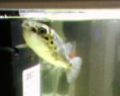
What happens when you feed a puffer too large a snail?
I tried feeding my puffers snails for the first time a few days ago. I thought they seemed small enough, but I'm wondering now if the snails were too big, can they cause problems with choking? The reason I ask is that I lost my puffer a few days after the snails and I am hoping it's just coincidence- but does this happen?


-
OraLacerta

- Former Staff Member
- Posts: 573
- Joined: Mon Apr 17, 2006 12:51 am
- Gender: Female
- My Puffers: Tetraodon biocellatus.
RIP: C. travancoricus, Chilomycterus schoepfi. Canthigaster jactator. - Location (country): USA
- Location: USA
Yes, it sounds like a coincidence. The reason for the guideline 'snail the size of the puffer's eye' is so the puffer has to crush the shell in order to get to the meat. With larger snails they tend to slurp the snail right out of the shell thus defeating the purpose.
-Michelle
Prevent unnecessary deaths due to disease- quarantine ALL new additions at least 4 weeks in a separate tank before adding to your main display tank!
Puffers: Hindenburg the Figure Eight, 75gallon Brackish
Prevent unnecessary deaths due to disease- quarantine ALL new additions at least 4 weeks in a separate tank before adding to your main display tank!
Puffers: Hindenburg the Figure Eight, 75gallon Brackish