Page 1 of 1
Tank Change - Methylene Blue
Posted: Fri Aug 25, 2017 2:31 pm
by sosystems
IMG_20170424_110452751.jpg
IMG_20170424_110458553.jpg
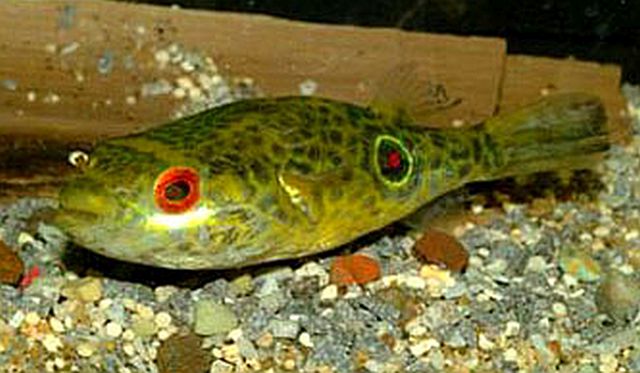
I am considering moving my Two Red Spot (Eye-Spot, Tail Spot... (Tetraodon leiurus)) to an adjacent larger tank.
The reasons are they are not very active except for feeding time (even then not so much), and have not grown in the year I've had them (2in).
They currently have an inert pebble substrate (black), with jumbled rock & plastic plants & surface floating hornwort with no other fish.
New has sand and real pebble substrate (not painted); newer tank last housed a breeding pair of flowerhorns, and the male beat the female even though I had a plastic permeable tank divider ( broke the bottom corner and snuck through), which resulted in my trying to treat her in that tank with Melafix and Methylene Blue (unsuccessfully); after water change of 95% and running the filter with the carbon back in, will it be safe to put the puffers in there, and how soon will the suspected bio-filter damage from the M blue, take to be restored if at all ( treatment was 36hrs at a low dose 5ml/10g of the MBlue ) Snails in there are unaffected as of now...
Will be planting hornwort in addition to previous aquascaping.
I initially had slightly brackish in their original tank (0005) real light, i see conflicting accounts about the addition of a fluctuating brackish salinity... currently salinity is untraceable.
Current
Am 0
Nitrite 0
Nitrate 60-85 (stable)
ph 7.6
temp 72
New Tank
AM = 0
Nitrite = 0
Nitrate very slight less than 10 (full water change)
ph is 7.8
temp 72
snails still alive...
will be using existing filters & media
Re: Tank Change - Methylene Blue
Posted: Sat Aug 26, 2017 9:21 pm
by Bleedingheartmommy
Stop!!!!!
You don't have a Leirus and it won't grow no more!!! It's a Cochin (Fangs puff) they max at 4" but usually get around 3", they are lurkers and can be extremely inactive, and if you feed during daylight hours- then they aren't usually much more active because they are dusk active fish (the red eyes are the tip off for nocturnal fish)! I have one myself, and when feeding at night he is much more active!!!
Re: Tank Change - Methylene Blue
Posted: Sat Aug 26, 2017 9:25 pm
by Bleedingheartmommy
The MB won't do much at tht level and length of use, however it is best to use a FW master test kit to check all parameters before you swap. The Cochins don't burrow but they do prefer sand and will appreciate the plants! Giving him a good hiding cave will also help. But tbh, I don't think there was or is anything wrong with this puffer! even if he was a true Leirus, he wouldn't be very active as they are also night active lurkers!
Re: Tank Change - Methylene Blue
Posted: Sun Aug 27, 2017 12:52 am
by Pufferpunk
I don't know why you have these FW fish in BW at all?
Re: Tank Change - Methylene Blue
Posted: Sun Aug 27, 2017 3:43 pm
by sosystems
Thank you for your responses. I have the test kit you mentioned and verified identical parameters (after modifications).
I see that there is conflicting online information; While I do not wish to argue (totally pointless, no reason to and not at all interested in arguing at all)
I just want the best for my guys...
Here's where my confusion came from:
http://www.pufferlist.com/freshwater-puffers/
Shows no red spot for Fang's and much lighter color overall...
Majority of the images show no red for Fangs but red for Leirus:
https://www.google.com/search?biw=1600& ... Jnc#imgrc=_
Pforum posts below show turgis & Not Leirus for no redspot...
Cant post the next 2 puffers from pf; (shows as a possible threat)...but no red spot
viewtopic.php?t=26917
viewtopic.php?t=997&start=15
https://www.google.com/search?biw=1600& ... jf884wdc9M:
images.jpg
http://www.tropical-fish-keeping.com/ta ... YfAGl.dpbs
Target-Puffer-Tetraodon-leiurus...jpg
...has red spot
http://www.tropical-fish-keeping.com/wp ... iurus..jpg
Target-Puffer-Tetraodon-leiurus..jpg
has Red Spot
http://www.seriouslyfish.com/species/te ... chinensis/ Writes:
T. cochinchinensis is part of the ‘target’ puffer group, which contains 4 other species, namely T. cambodgiensis, T. leirus, T. turgidus and T. hilgendorfi. Some confusion surrounds this group, as they all hail from the same geographical area and share very similar physical characteristics. Cochinchinensis can be distinguished by the clear red spot situated towards the rear of the fish
tetraodon_cochinchinensis_1.jpg
(No red spot...)
Re: Tank Change - Methylene Blue
Posted: Sun Aug 27, 2017 4:18 pm
by Bleedingheartmommy
Lol ahh, the great target debate!!! TBH, most of the true ids are wrong. The target fades on most and can even disappear on some target species as adults. Your Cochin is stressed a little (maybe from the brackish, but at very low end I think only a long period of being in only brackish would cause stress, but I've never kept Cochins in brackish... but I have seen many pet stores saying they are?) I have spent a long period of time studying targets and I have learned a few things, which I will share with you (for knowledge not argument)! The target can have very little tell, especially with adults. What's important is: snout length, the size of their other spots (also in proportion to their "eye" spot size (or target sIze), their body shape... and also belly markings. I am a huge book nerd (books and fish, who needs men lol) and I own Eberts Aqaualog for puffers and it has this taxonomy key which is not a be-all end-all, but serves as a good start for new target identification (my fav little secret, but I'll share for knowlege sake lol)
OK as for turgidus vs leiurus vs Cochinchinensis, the back of Ebert's Aqualog for Puffers has this taxonomy key:
1a ) Snout relatively short (eye diameter contained maximum 1.5 times in snout length); when fish rests, usually a hump is clearly remarkable on the back ----> Go To 2
1b ) Snout is relatively long (eye diameter contained two or more times in snout length); no hump on the back ----> Go To 3
2a ) Body with a distinct ocellus (eye-spot) on the side, always larger than other spots on body; spots on body irregular in form ----> Tetraodon cochinchinensis
2b ) If present, ocellus on body not larger than other spots on body; spots on body circular, the entire body more or less uniformly spotted ----> Tetraodon turgidus
2c ) No ocellus; dorsum not spotted, but with an irregular pattern ----> Tetraodon hilgendorfii
3a ) Belly not spotted ----> Tetradon cambodgiensis
3b ) Belly spotted ----> Tetraodon leiurus
Note: The systematics of this group are complex and the subject of scientific controversy. The nomenclature suggested by Maurice Kottelat (2000) is followed here. The key provided above is intended for the identification of live specimens whose origin is unknown. However, because of the variablility within this group of puffers, inevitably the key may prove of no use in the case of some individuals.
Re: Tank Change - Methylene Blue
Posted: Sun Aug 27, 2017 4:23 pm
by Bleedingheartmommy
The top pic you posted is indeed a true Turgidus, they have an unmistakable cave man club shape to their bodies, and the rest are all Cochins. Like I mentioned, the target changes... much more then most think. The color of the target means little. But the shape and size in comparison to the other spots on the body (and how uniform those body spots are) will tell you more!
Looking at the 3 pics of the Fangs', mine has resembled each picture at one point or another (depending on mood, food, light level, and if he was sleeping or not)... I call him my little octopus, because he changes color and blends in so well when he wants to