It's a little grainy and I moved the light forward which really highlight some scratches on my front glass.
http://www.youtube.com/watch?v=bu6_2n2vzRY
Her are some pics of when I first got them.


I really dig these little fish.


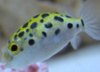

RTR wrote:Fahakas do not have tank mates, they may have swimming food reserves.
RTR wrote:Fahakas do not have tank mates, they may have swimming food reserves.
Do they eat all of the babies. I'm considering adding a trio of lyretail mollies but I don't want any babies running around and adding to their numbers. It's funny, when I just had the two BBGs in my tank I rarely got them to eat anything and I was getting worried but they were always nice and fat. Then I realized what was going on...The ghost shrimp were were having babies.jtbadco wrote:...when the guppies have babies, they swarm!!!
Aquaria Central http://www.aquariacentral.com/faqs/brackish/FAQ6.shtml
(5b) Bumblebee and other gobies (family Gobiidae)
...
The Asian bumblebee gobies Brachygobius are probably the most widely seen non-marine gobies in aquarium stores. It is a pity that so many are doomed to short lives, being rather difficult fish to keep well.
To keep bumblebee gobies well, three important rules must be observed. First, keep them alone. These are small fish which are likely to be bullied or even eaten by bigger fish. Secondly, provide lots of live or frozen foods. They will rarely take flake. Bloodworms, Daphnia, brine shrimp, and Mysis are all ideal staples which can be obtained cheaply frozen or caught live. Finally, keep the water well filtered with a strong but not turbulent current.
Bumblebee gobies will adapt to a range of salinties, depending on the species. Since they are so difficult to tell apart, a middle range set of values is probably best. Try a water temperature of around 27 C (80F), a pH of 7.5 and a specific gravity of 1.005. Keep the water hard using either chemical buffers or by incorporating shells or coral sand into the filter.
The best sort of aquarium for bumblebee gobies is of moderate size but thickly planted with either salt tolerant plants or plastic plants. Useful plants include Java Fern Microsorium pteropus, giant hygrophila "Nomaphila stricta", and onion plants Crinum thaianum. Allow these plants to form a thick tangle, which will help the gobies to feel comfortable. Driftwood and blackwater extract can be used (provided the filter is buffered to keep the pH high) to lend the water the peaty, dark quality characteristic of their swampy habitat. Decorate the bottom with large snail shells, such as those from apple snails Ampullaria.
Although bumblebees are best kept alone, in a good sized tank they can be mixed with other small fish. Ideal companions would be pipefishes, which also need live food.
There are a number of species of bumblebee goby, found from fresh to marine conditions. Three are imported regularly. The key diagnostic features are the "fin ray" counts and colouration, although the latter varies somewhat. Listed below are the three species most likely to be seen in tropical fish shops:
* Brachygobius aggregatus is more restricted in range to the islands around the Phillipines and Borneo. It is found in fresh, brackish and salt water. The anal fin has one spine and six rays. In colouration it is basically yellow with four thick black bands, although the bands are not complete over the belly. The first dorsal fin is black. The second dorsal and the anal are transparent. This species should not be kept without salt in the water (a specific gravity from 1.005 to 1.010 recommended). It will even adapt to marine conditions.
* Brachygobius doriae is a widely distributed fish found in fresh and brackishwater. The anal fin has one spine and seven rays. Unlike Brachygobius doriae both the second dorsal and the anal fins are dark save for pale patches at the base. This species adapts best to freshwater, providing the pH and hardness are relatively high. This may be the same fish as the very similar Brachygobius nunus.
* Brachygobius xanthozona is from Indonesia and Borneo and is found in fresh and brackishwater. Similar to the previous species except that the anal fin has one spine and eight rays. Both of the dorsal fins and the anal fin are black except for small transparent triangular patches at the base of the second dorsal and anal fins.
...
What??? Better re-read the post....RTR wrote:Great setup for SAPs! It is pretty close to ideal. with a bit more current along the front glass it would be ideal.
But, why is the F-8 in there? That is not a FW fish IME.


