Hi Folks,
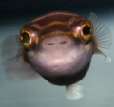
Is it possible for a GSP (or any other puffer for that matter) to suffer from HLLE? My GSP has developed some small, golden spots between his eyes, over his snout and extend along his centre line to behind his eyes. (Granted that's not the greatest description - so if anyone's familiar withe medial terminology he has spots from his snout that extend medio-caudally just further than his eyes.)
His appetite has not been affected, neither has his activity levels and his tummy is as white as ever. Also, he is not flicking or scratching against anything either.
His water parms are:
SG: 1.0012
NH3 0
NO2 0
NO3 <15
I have already dosed him with Melafix (as i do not have any pima to hand - you may remember when i posted about my F8 who passed on, that my LFS only stocked out of date pima at the time!!) as a precautionary measure.
Any ideas?
TIA
Neil
Sand grain-type affliction
Forum rules
Read this before posting!!
Since this board has been up, we have found there are several questions that routinely get asked in order to help diagnose problems. If you can have that information to begin with in your post, we'll be able to help right away (if we can!) without having to wait for you to post the info we need.
1) Your water parameters - pH, Ammonia, Nitrite, Nitrates and salinity (if appropriate). This is by far the most important information you can provide! Do not answer this with "Fine" "Perfect" "ok", that tells us nothing. We need hard numbers.
2) Tank size and a list of ALL inhabitants. Include algae eaters, plecos, everything. We need to know what you have and how big the tank is.
3) Feeding, water change schedule and a list of all products you are using or have added to the tank (examples: Cycle, Amquel, salt, etc)
4) What changes you've made in the tank in the last week or so. Sometimes its the little things that make all the difference.
5) How long the aquarium has been set up, and how did you cycle it? If you don't know what cycling is read this: Fishless Cycling Article and familiarize yourself with all the information. Yes. All of it.
We want to help, and providing this information will go a LONG way to getting a diagnosis and hopeful cure that much faster.
While you wait for assistance:
One of the easiest and best ways to help your fish feel better is clean water! If you are already on a regular water change schedule (50% weekly is recommended) a good step to making your fish more comfortable while waiting for diagnosis/suggestions is to do a large water change immediately. Feel free to repeat daily or as often as you can, clean water is always a good thing! Use of Amquel or Prime as a dechlor may help with any ammonia or nitrite issues, and is highly recommended.
Note - if you do not normally do large water changes, doing a sudden, large water change could shock your fish by suddenly changing their established water chemistry. Clean water is still your first goal, so in this case, do several smaller (10%) water changes over the next day or two before starting any large ones.
Read this before posting!!
Since this board has been up, we have found there are several questions that routinely get asked in order to help diagnose problems. If you can have that information to begin with in your post, we'll be able to help right away (if we can!) without having to wait for you to post the info we need.
1) Your water parameters - pH, Ammonia, Nitrite, Nitrates and salinity (if appropriate). This is by far the most important information you can provide! Do not answer this with "Fine" "Perfect" "ok", that tells us nothing. We need hard numbers.
2) Tank size and a list of ALL inhabitants. Include algae eaters, plecos, everything. We need to know what you have and how big the tank is.
3) Feeding, water change schedule and a list of all products you are using or have added to the tank (examples: Cycle, Amquel, salt, etc)
4) What changes you've made in the tank in the last week or so. Sometimes its the little things that make all the difference.
5) How long the aquarium has been set up, and how did you cycle it? If you don't know what cycling is read this: Fishless Cycling Article and familiarize yourself with all the information. Yes. All of it.
We want to help, and providing this information will go a LONG way to getting a diagnosis and hopeful cure that much faster.
While you wait for assistance:
One of the easiest and best ways to help your fish feel better is clean water! If you are already on a regular water change schedule (50% weekly is recommended) a good step to making your fish more comfortable while waiting for diagnosis/suggestions is to do a large water change immediately. Feel free to repeat daily or as often as you can, clean water is always a good thing! Use of Amquel or Prime as a dechlor may help with any ammonia or nitrite issues, and is highly recommended.
Note - if you do not normally do large water changes, doing a sudden, large water change could shock your fish by suddenly changing their established water chemistry. Clean water is still your first goal, so in this case, do several smaller (10%) water changes over the next day or two before starting any large ones.
-
Boxermom

- Former Staff Member
- Posts: 2182
- Joined: Sun Mar 12, 2006 8:34 pm
- Location: Wisconsin
- Contact:
Can you get a picture? Does it look like individual distinct spots or more like he's been dusted with something?
Tina
Puffers: Auriglobus silus x1, Tetraodon travancoricus x1, Tetraodon turgidus x1, Tetraodon miurus x1, Tetraodon nigroviridis x2, Tetraodon baileyi x2, Tetraodon lineatus x1, Tetraodon palembangensis x1
Puffers: Auriglobus silus x1, Tetraodon travancoricus x1, Tetraodon turgidus x1, Tetraodon miurus x1, Tetraodon nigroviridis x2, Tetraodon baileyi x2, Tetraodon lineatus x1, Tetraodon palembangensis x1
-
manutius

- Former Staff Member
- Posts: 1316
- Joined: Mon Dec 11, 2006 3:49 pm
- My Puffers: RIP Clooney the Mbu :(
- Location: Southend essex, UK
- Contact:
Go to the gallery section at the top and set up your own album then upload it from your ahrd drive or email it to me at
smorse@greensward.essex.sch.uk
and I'll whack it up for you
smorse@greensward.essex.sch.uk
and I'll whack it up for you
sorted! was just in a rush and couldn't be arsed to "learn" anything new - user gallery - what a great idea and dead simple - even an IT manager can use it!! <--me ;o)
i did think velvet first of all but all the pictures i've seen do not relate to the head and these look more like little pin-pricks? the picture is not the best quality - but hey, he's an active bugger!!
i did think velvet first of all but all the pictures i've seen do not relate to the head and these look more like little pin-pricks? the picture is not the best quality - but hey, he's an active bugger!!
-
Boxermom
- Former Staff Member
- Posts: 2182
- Joined: Sun Mar 12, 2006 8:34 pm
- Location: Wisconsin
- Contact:
Doesn't look like ich or velvet, looks like abrasions. If so, I would use Melafix and Pimafix to prevent infection.
Tina
Puffers: Auriglobus silus x1, Tetraodon travancoricus x1, Tetraodon turgidus x1, Tetraodon miurus x1, Tetraodon nigroviridis x2, Tetraodon baileyi x2, Tetraodon lineatus x1, Tetraodon palembangensis x1
Puffers: Auriglobus silus x1, Tetraodon travancoricus x1, Tetraodon turgidus x1, Tetraodon miurus x1, Tetraodon nigroviridis x2, Tetraodon baileyi x2, Tetraodon lineatus x1, Tetraodon palembangensis x1

