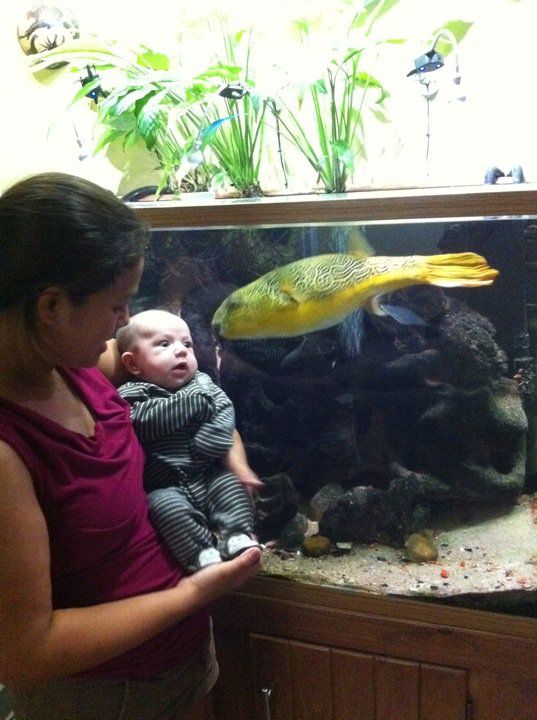
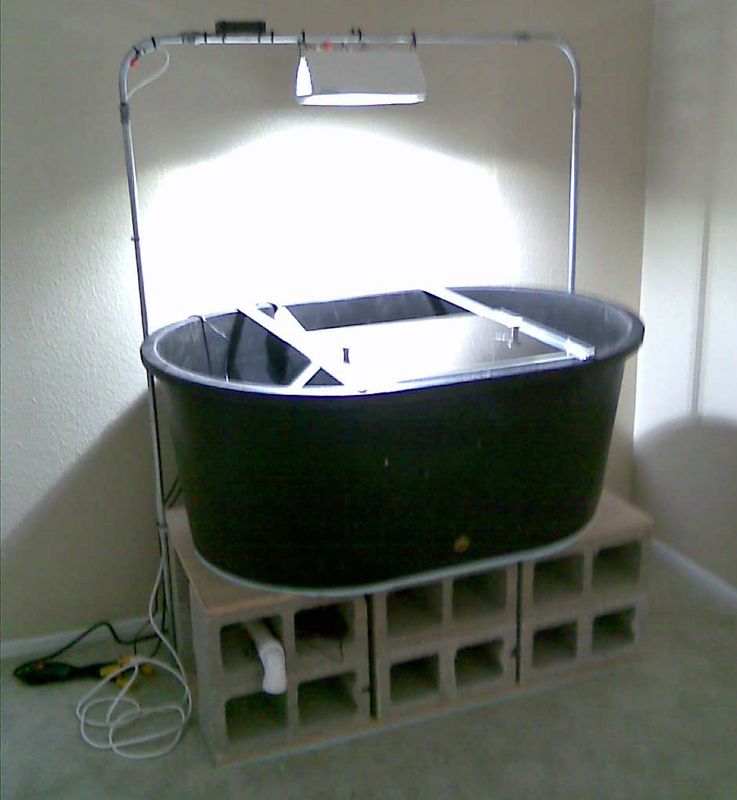
We stayed in an 800' sq. apartment while the remodel was happening. My wife and me, two cats, a german shepherd, three snakes, and 150 gallon stock tank in the living room. I did not mention that on the "pets" part of the lease application...
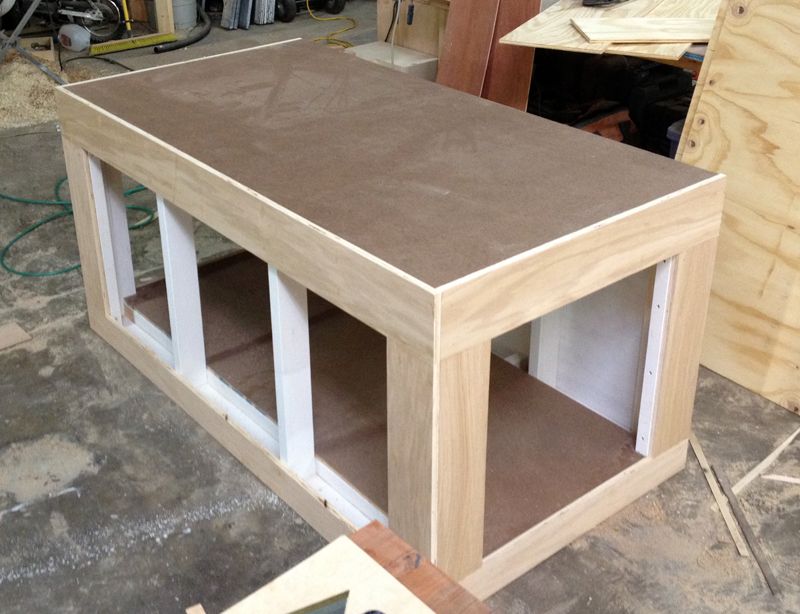
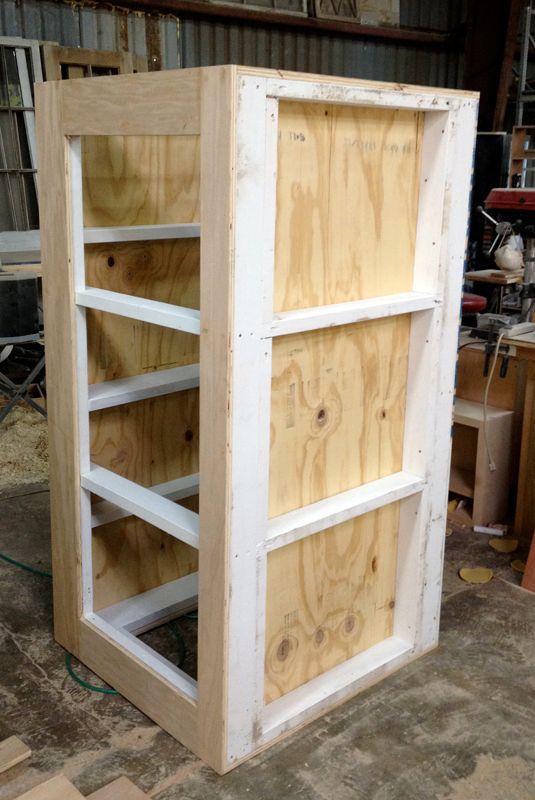
In the meantime, plans were being put into motion for the tank. I commissioned a furniture maker we had used in the past to build the stand carcase for us....
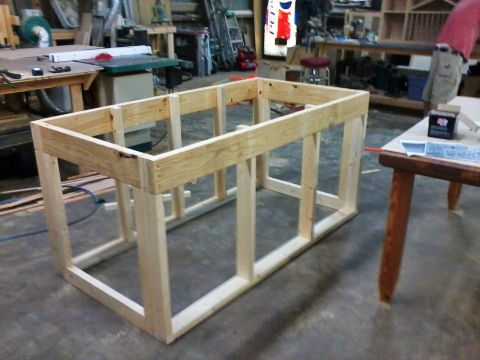
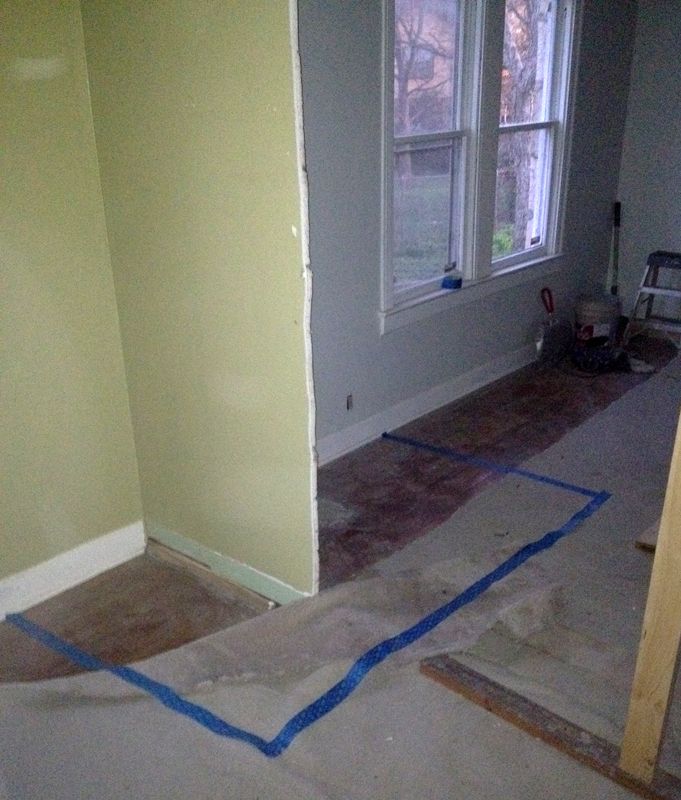
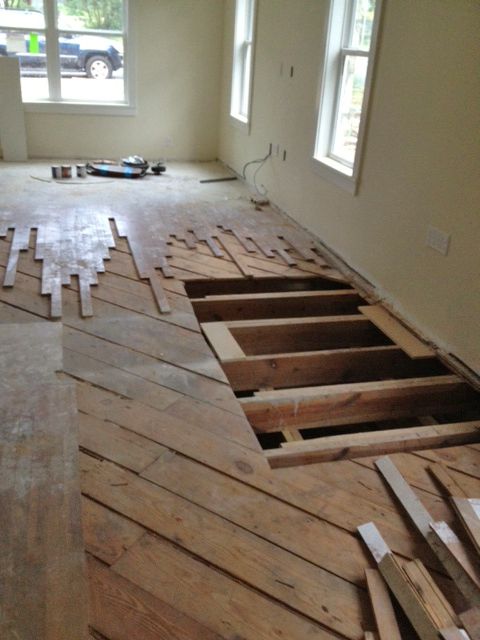
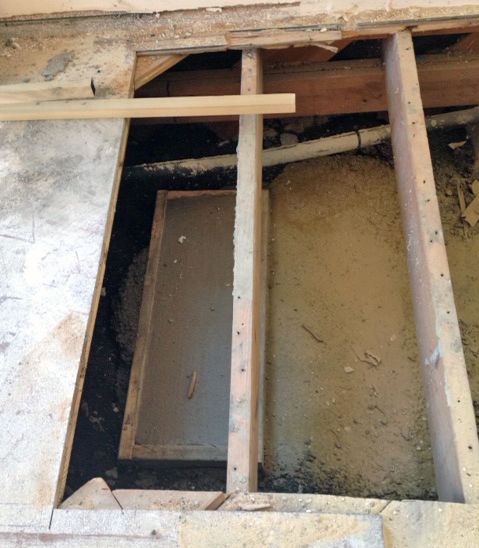
At the house, planning the location for the 6'x3' tank. Due to the extreme weight of the tank and stand and the fact that our house is on a pier-and-beam foundation, I did not want any of that weight on the floor joists, themselves, so we specified a dedicated concrete pad be poured directly under the fish tank area, and the blocked up the floor joists with high-strenght LVL beams. This way, the weight comes directly down onto the pad...
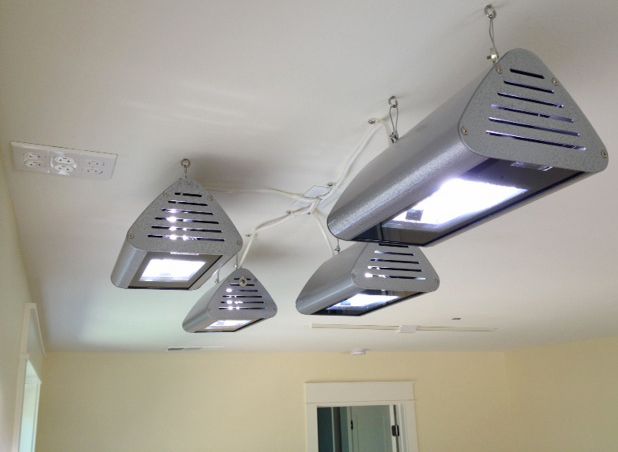
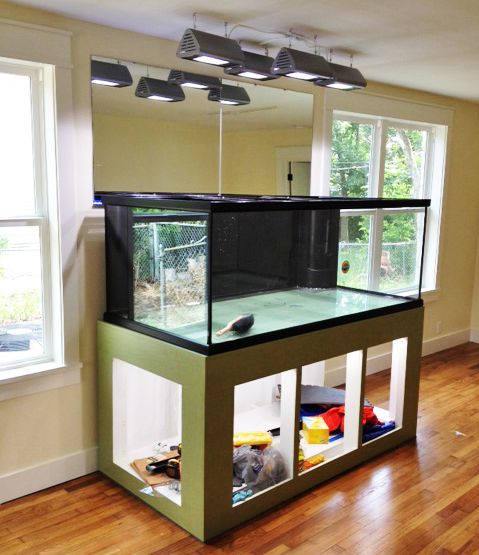
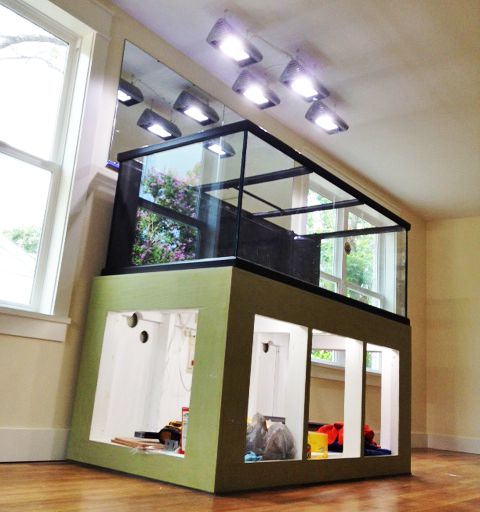
While the contractors were handling that framework, I set to work on the lighting. These are Giesemann Nova II pendant halides that I have accumulated over the years. Assorted colors, I planned to use four, so refinished them all in a "hammered silver" finish, so as to be unobtrusive against the ceiling...
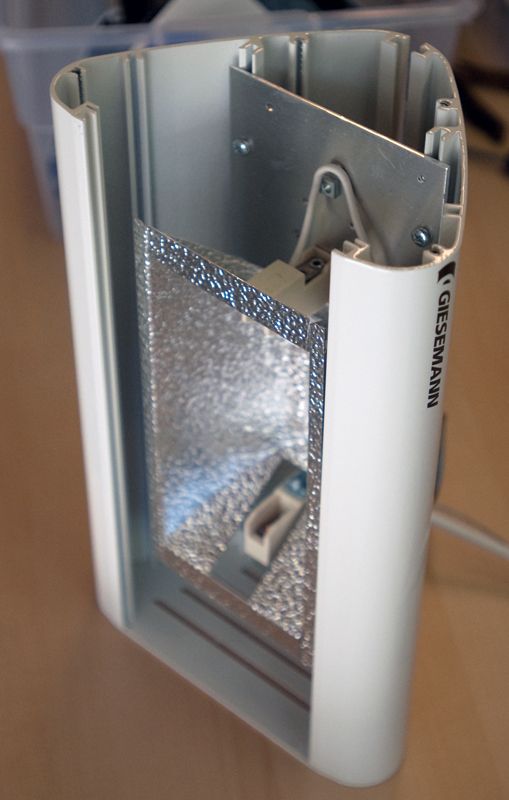
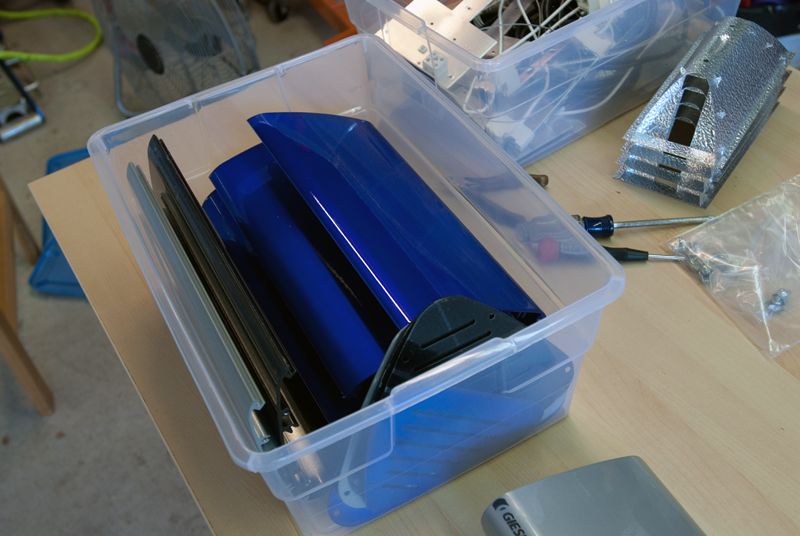
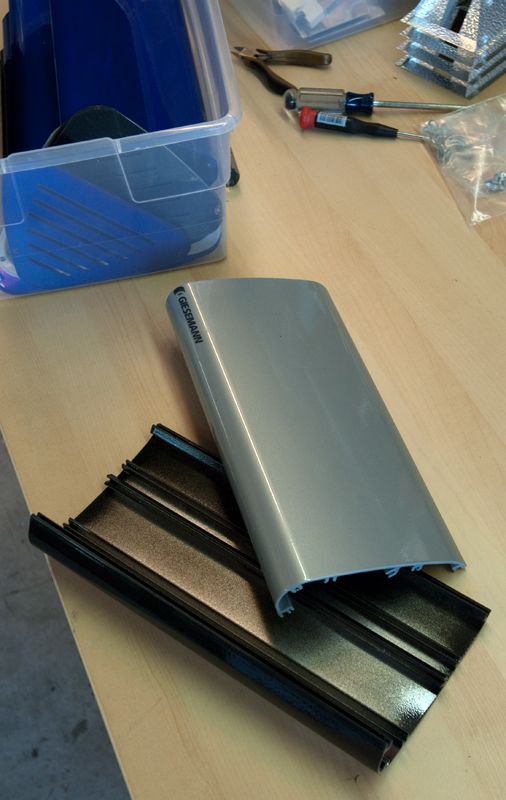
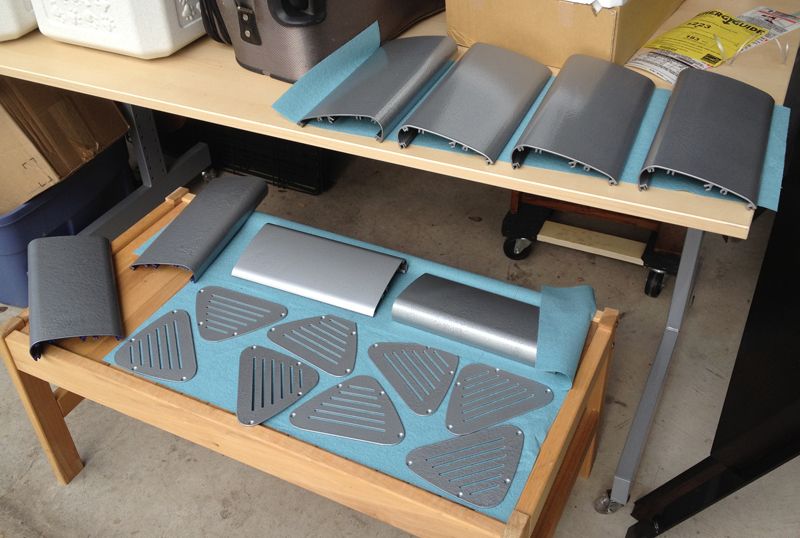
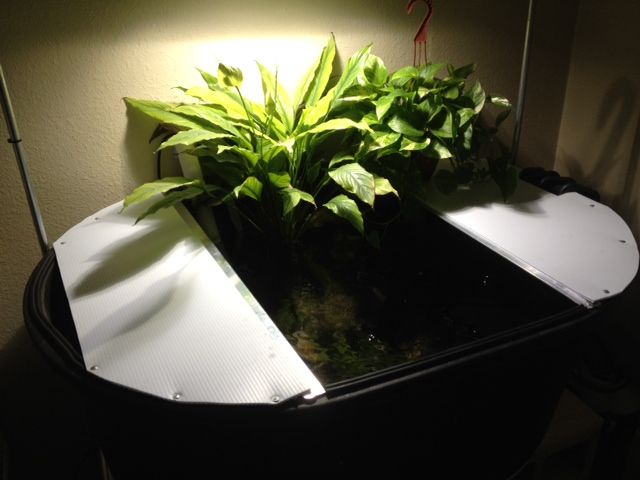
The idea for the tank is to have an open top, with emergent plants growing out of the surface, towards the lights. The lights would be mounted at the ceiling...
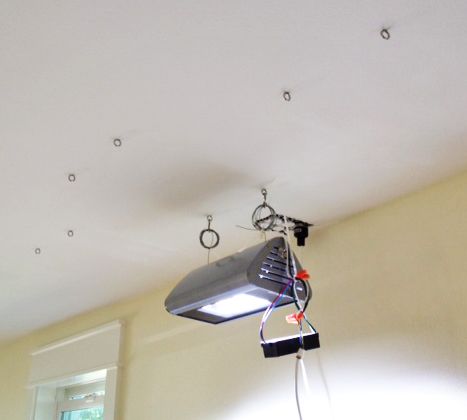
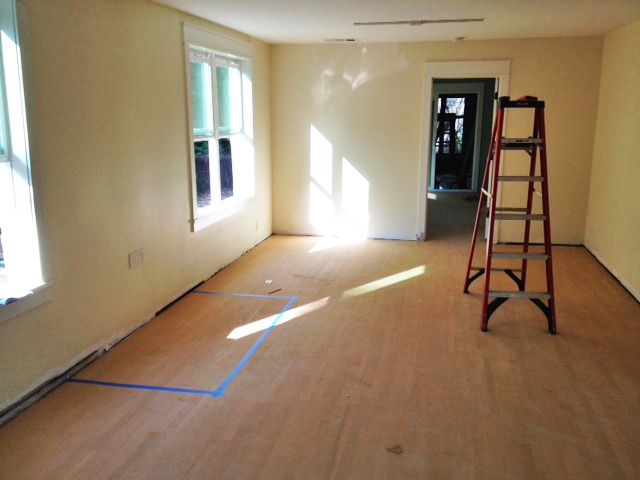
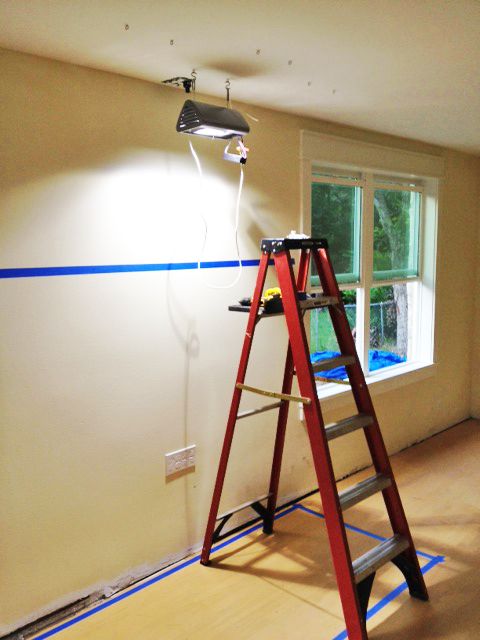
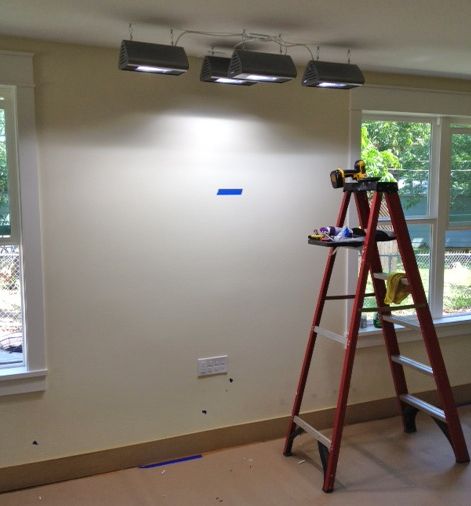
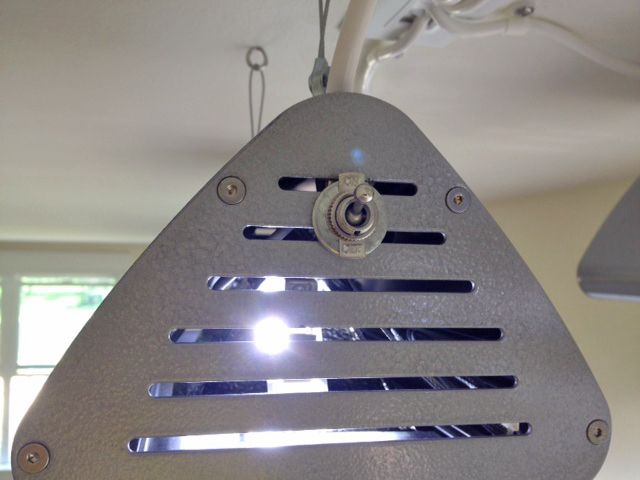
The Giesemanns were originally either 150w or 250w each and had giant magnetic ballasts. I wanted to be energy-conscious with this setup, so decided on refitting them with electronic ballasts and 70w bulbs. I was able to purchase some Osram "Excellence" 5,500K HQI bulbs from a dealer in Hong Kong (they seem to be totally unavailable in the US for whatever reason) for a surprisingly affordable $18 each (compared to about $80 each for Ushio 8,000K's...) and I LOVE these bulbs! Possibly, brighter than the 150's that I had in the past and very stable light output.
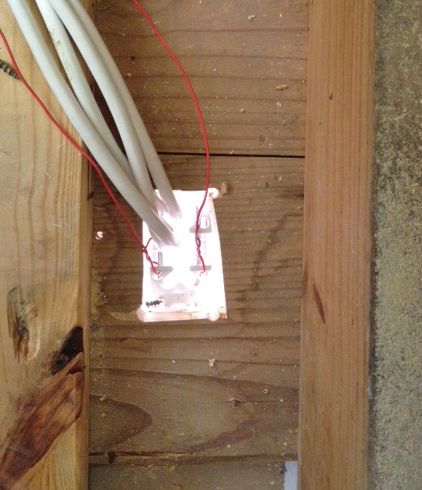
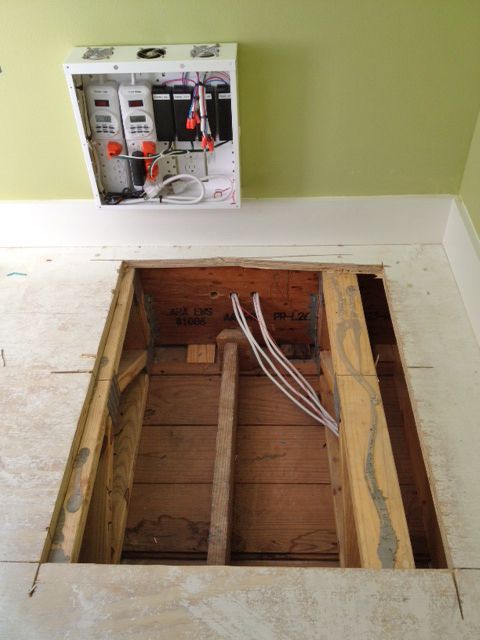
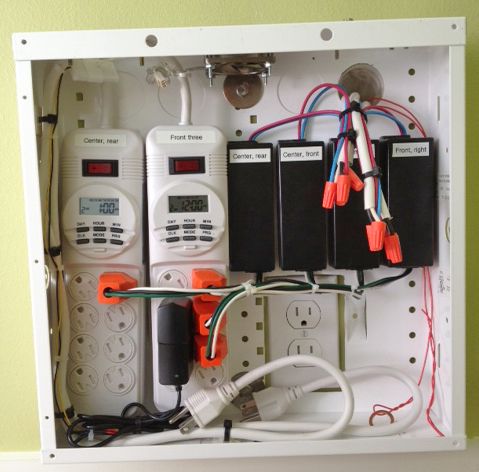
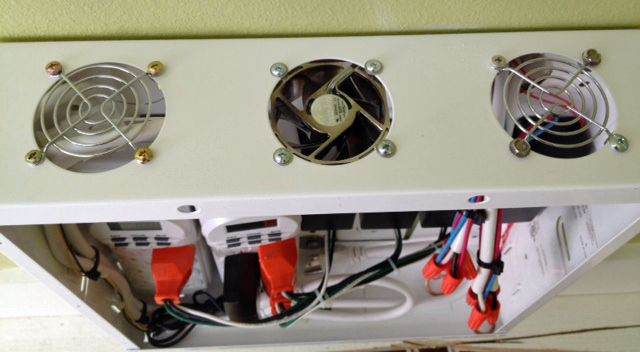
Metal halide lights require a ballast to drive the bulbs and that is typically mounted remote from the actual light fixture. In order to keep as clean an appareance as possible on the ceiling, I decided to mount the ballasts in our upstairs closet, the wire leads running through the ceiling space. The box I fabricated, containing the ballasts and timers. I can stagger the order in which they come on and off...
I finished the stand in a low-key green color and then clear-coated the whole thing for moisture protection...
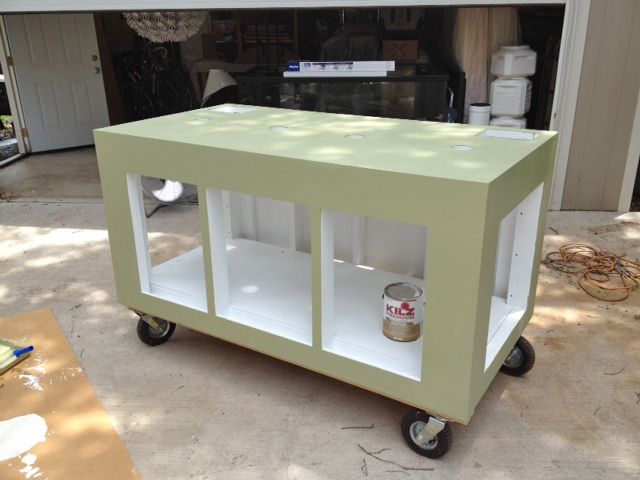
The doors are reclaimed salvage Longleaf Pine and will get mounted as the very last step...
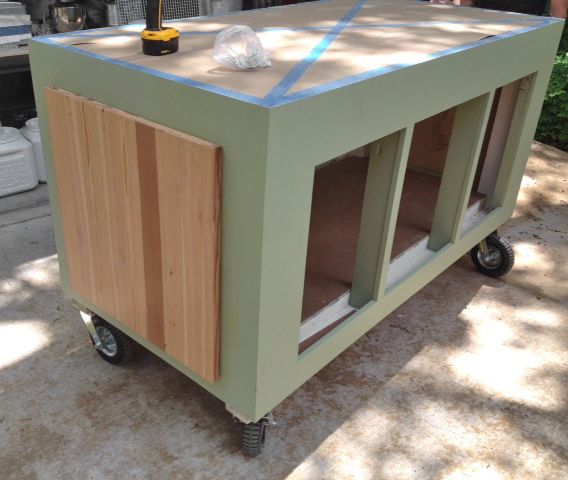
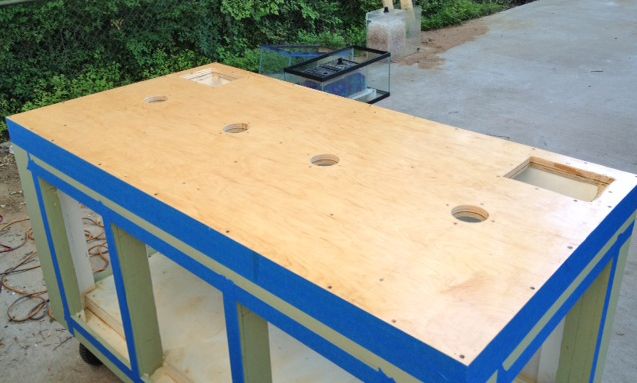
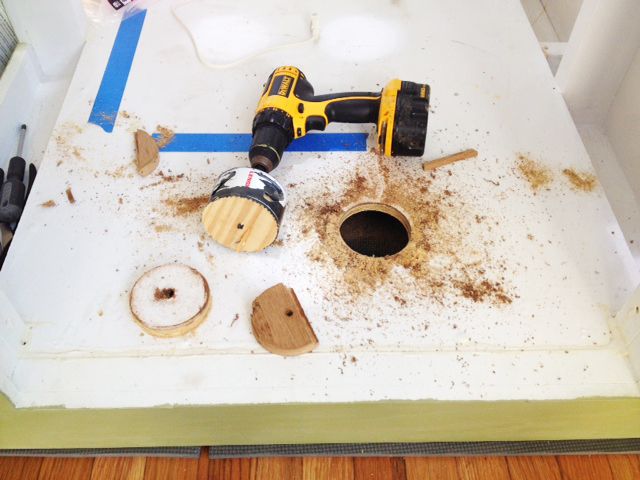
Coating of epoxy on the top of the stand and then on all inside surfaces, for moisture protection. The white color is Killz primer and the round holes in the top are foor a substrate heating system I thought about but decided to forego...
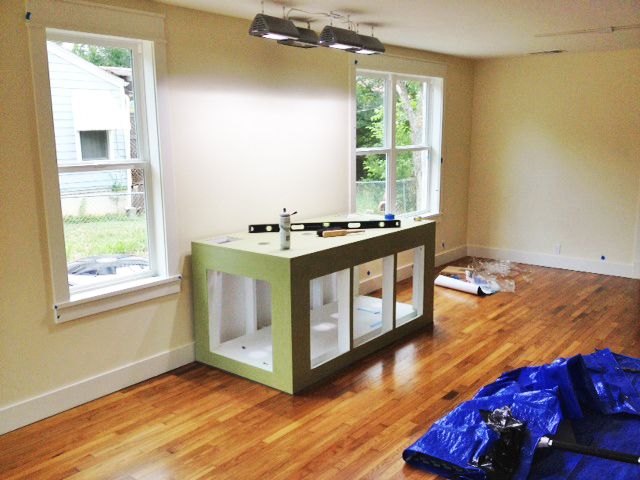
The stand now in place in the house...
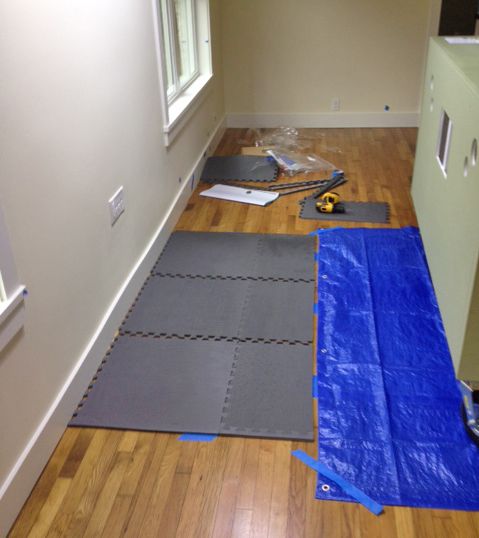
Anti-fatigue mat under the stand, to fill any irregularities between the base of the stand and the hardwood floor...
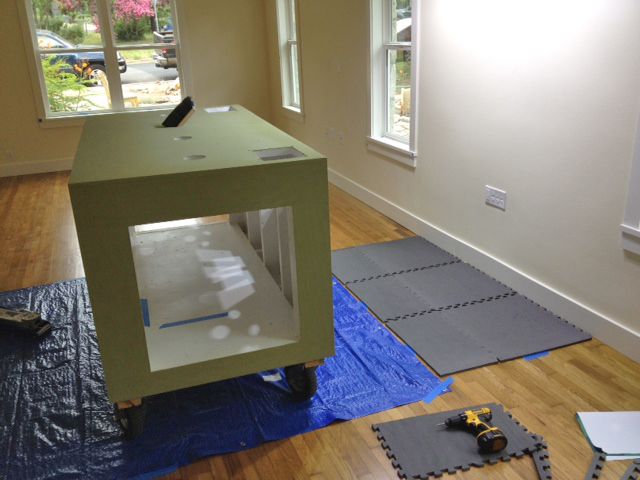
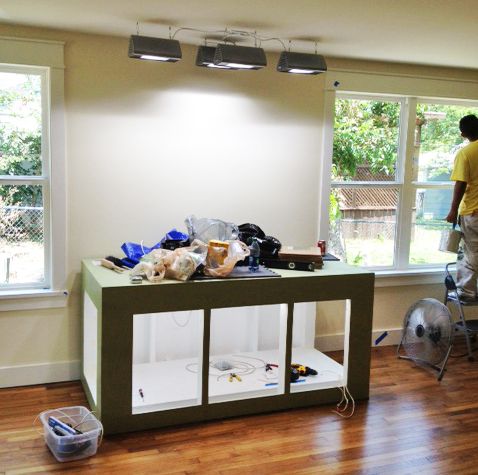
Lights inside the stand, for working on filtration, etc....
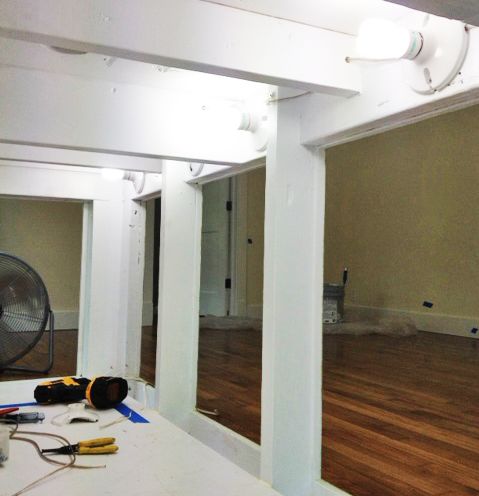
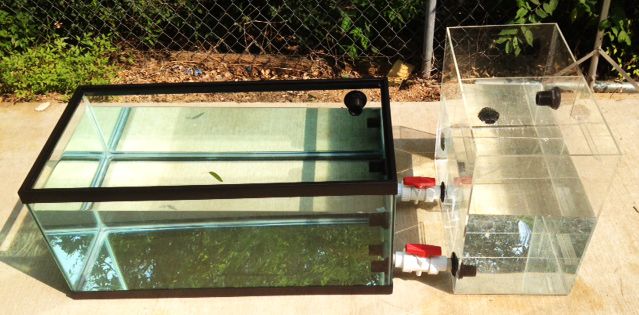
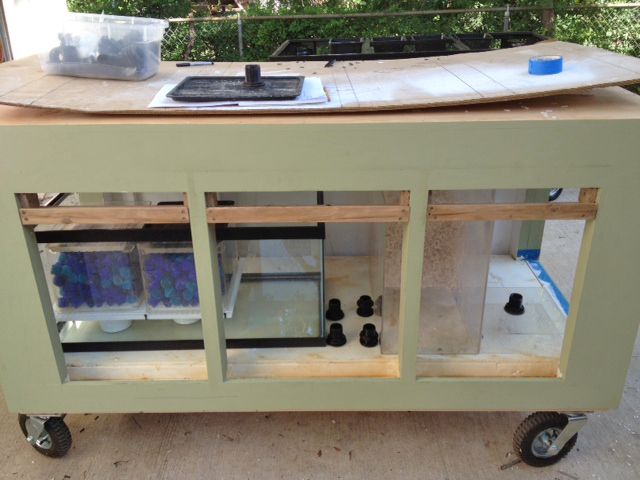
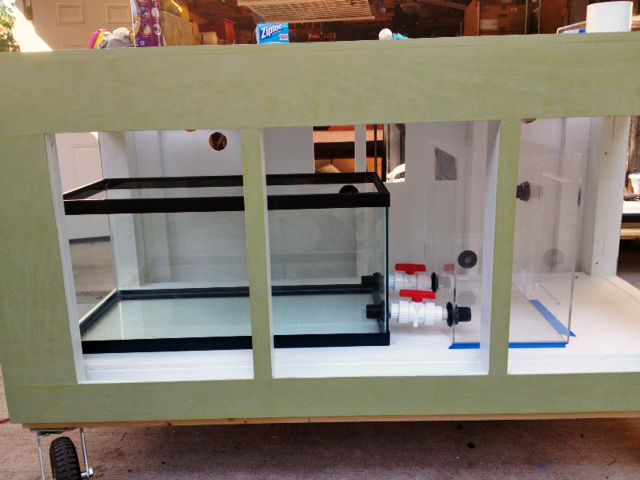
Now that the stand is in, time to work on the filtration. I had been using a couple of large Marineland C-360 cans up to this point, and planned to continue using them in the 300, but also wanted a wet/dry filter due to the size of the tank and volume of fish. Since I'm a DIY kinda' guy, I just scoured Craigslist for some used wet/drys. Not bad for $80, right?..
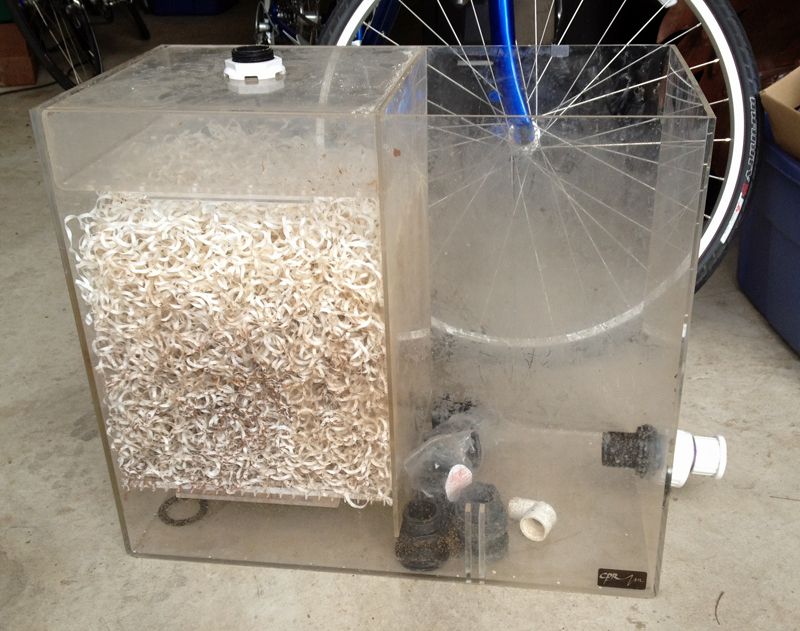
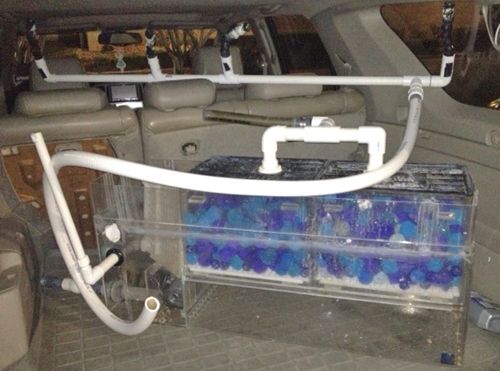
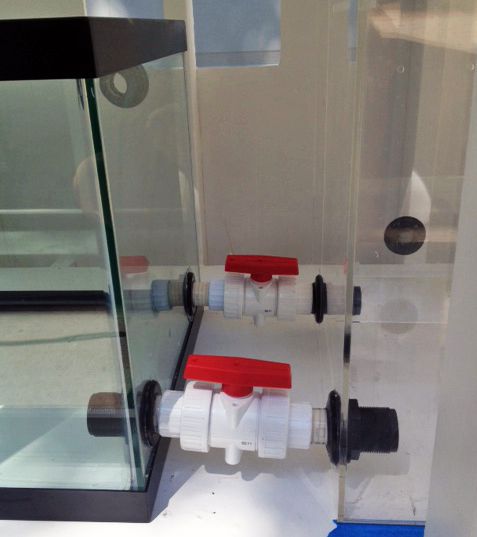
Drill a few holes, add one 40G breeder flat from Petsmart and a couple of bulkheads, and presto, you have a functioning wet/dry...
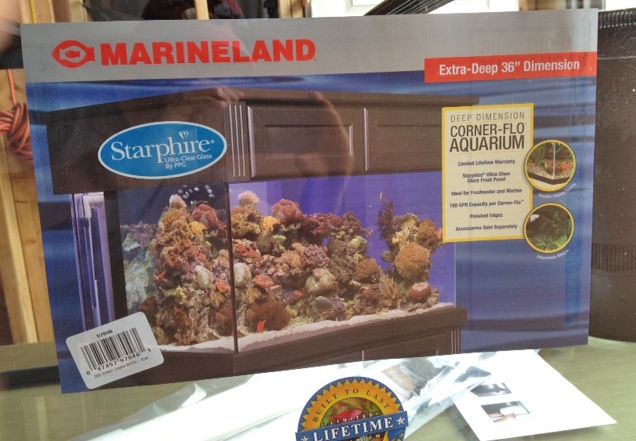
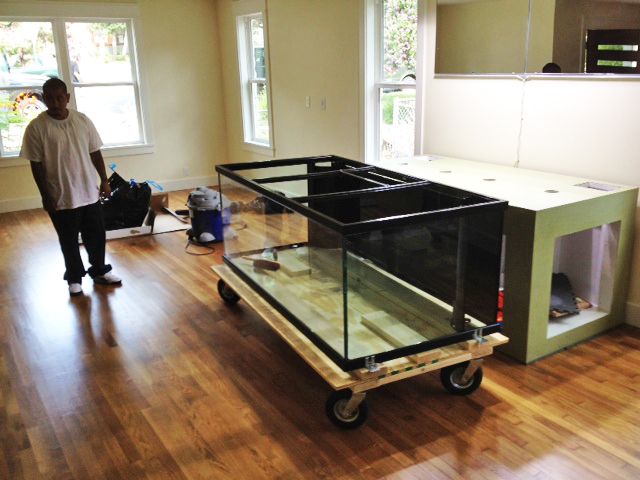
Big news! The store called. Our tank had arrived. A Marineland Deep Dimension 300G with Starphire ultra-clear front panel. The largest production glass tank available...
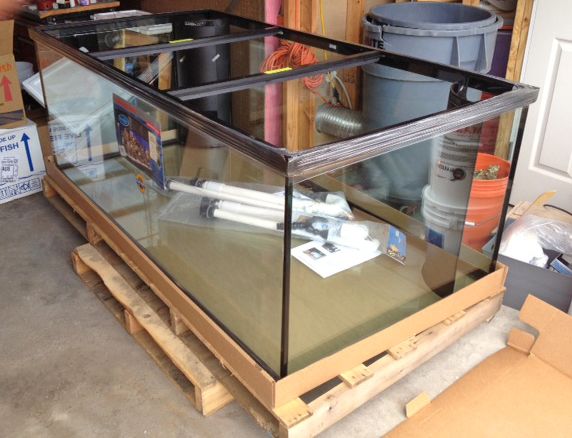
Delivered to the house and moved to the garage, for "modifications"...
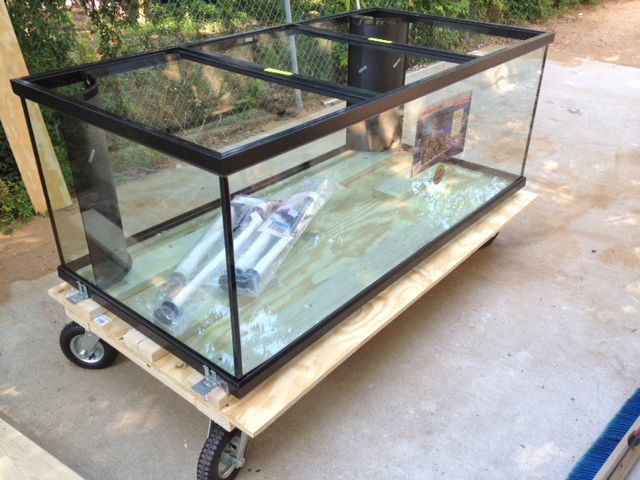
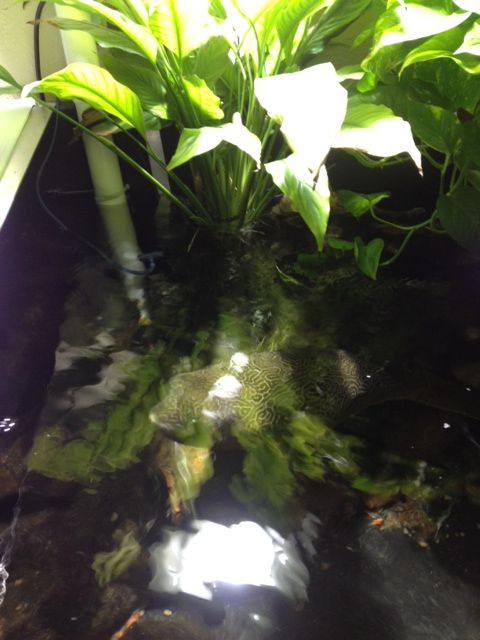
Getting back to an earlier comment, I have used (and HIGHLY reccommend..) the inclusion of live plants such as Pothos, for nitrate control. For anyone unfamiliar with this, Google "pothos nitrate removal". Apparently, this particular plant does an exceptionally good job of pulling organic pollutants from the water. To the point that I cannot test any trace of NO3 after months of the tank being set up, now. In fact, I think that the inclusion of plants like Pothos and Peace Lilly (Spathiphyllum) in our tanks is why we have done so well with the big guy. My plan was to relegate the back 1/3rd of the tank to live plants. The peace lillies would get planted in plastic baskets and the pothos would have cuttings placed through sections of plastic eggcrate, the idea being that their roots would descend into the water. The pictures are pretty explanatory...
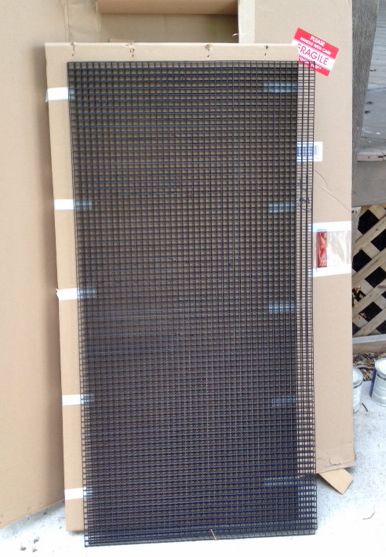
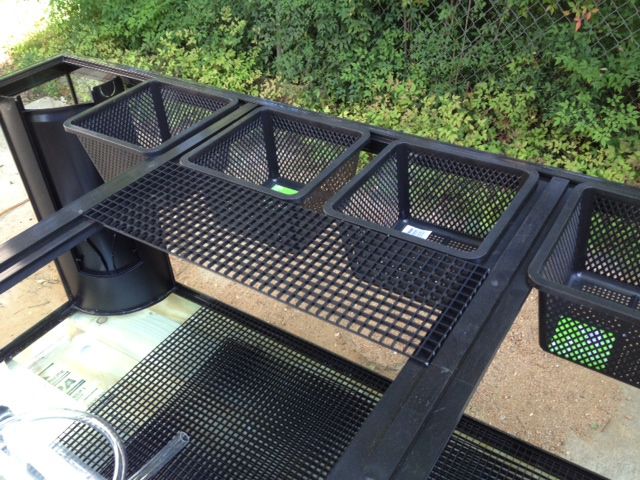
These wire grates are actually shelving rackes I bought from Lowe's, then cut to fit the top of the tank. The idea is that potted orchids, bromeliads, and other house plants will be placed on them, filling out the back of the tank....
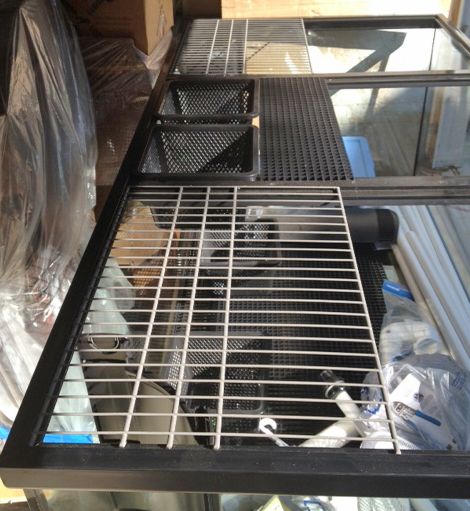
Tank gets a coat of flat black latex on the back...
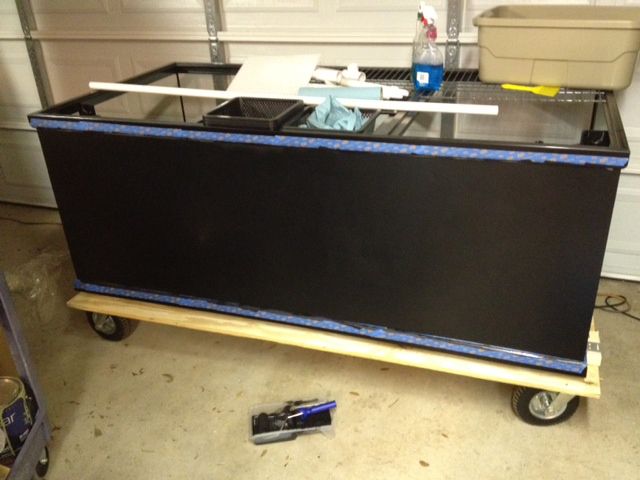
I had this idea to place mirrors behind the planted area of the fish tank, to give an "endless depth" look...
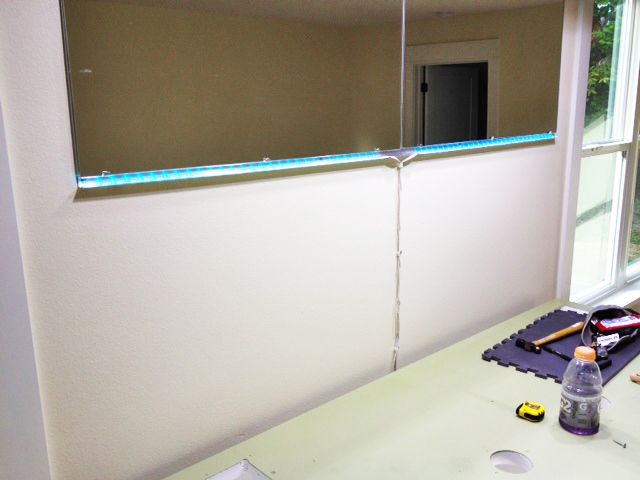
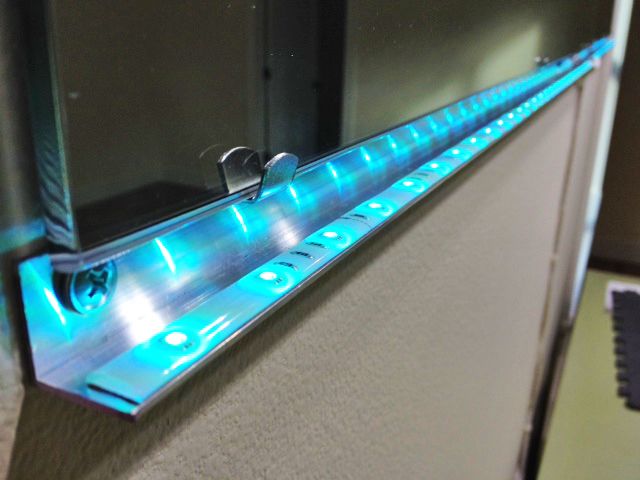
The light strips you see there are "Dioder" from Ikea. Water resistant and adhesive backed. I mounted some aluminum L-channel to the wall and then stuck the Dioder strips to those. The idea being to backlight the "jungle" after dark...
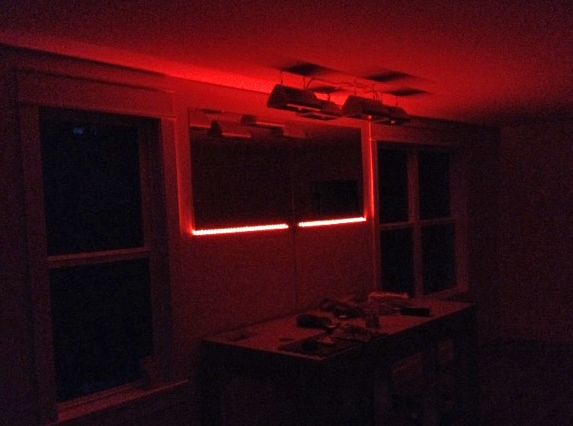
Playing around with the various colors at night...
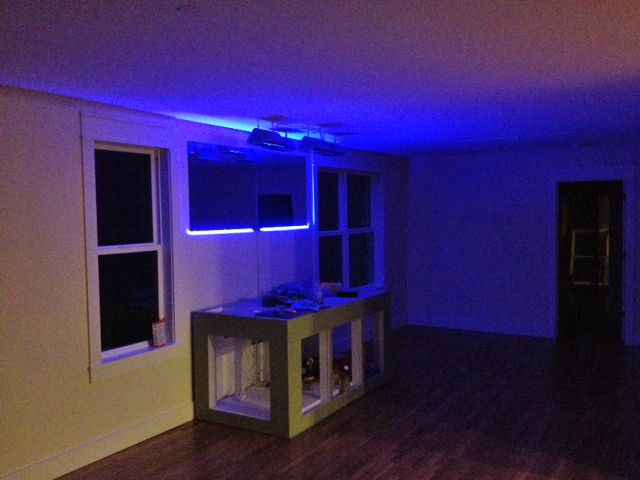
Things coming together...
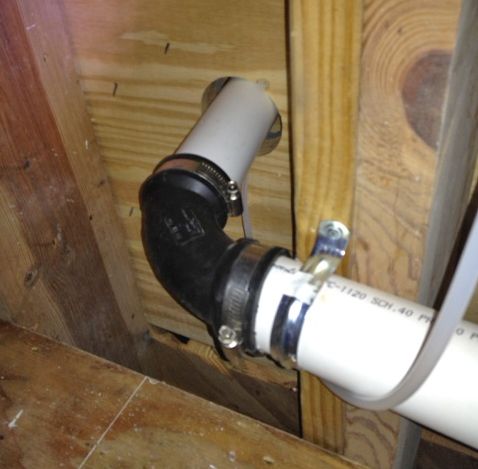
I neglected to mention this earlier but one of the things I wanted to do with the filtration system was ceate a way to reclaim the wastewater and use it to irrigate our garden with, since I discard about 50 gallons a week. Here you can seehead of the drain pipe, before the flooring guys covered it back up...
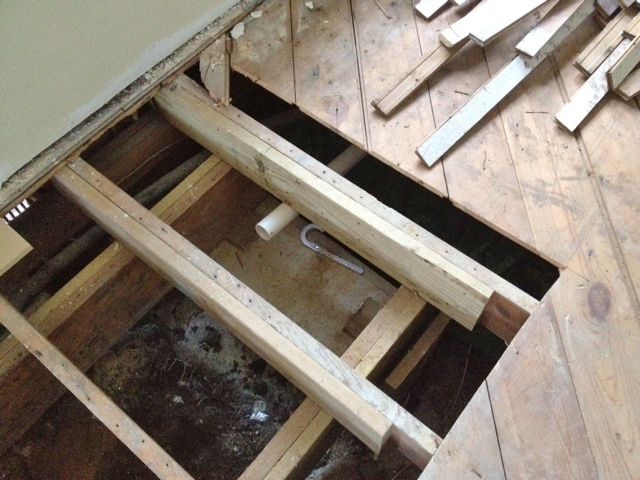
Under the house and out to the yard...
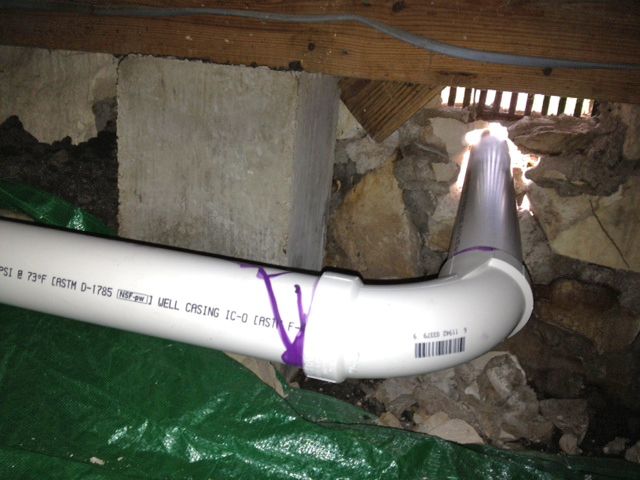
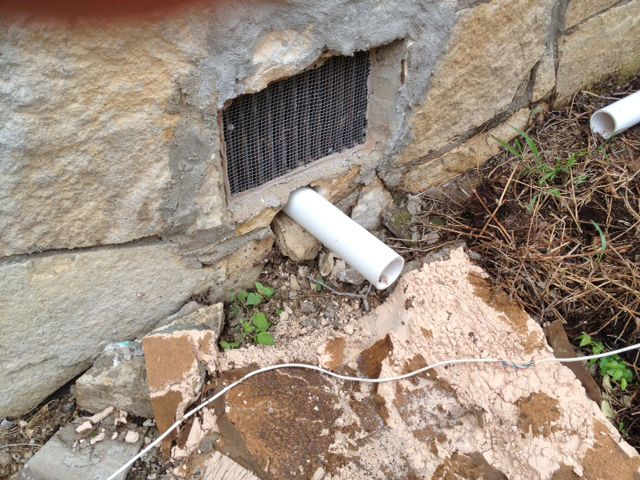
While I was under the house, I also installed a tee for the auto-top off system I plan to install at some point. The open-top design of the tank loses several gallons a day to evaporation, so this will be a necessity by some point...
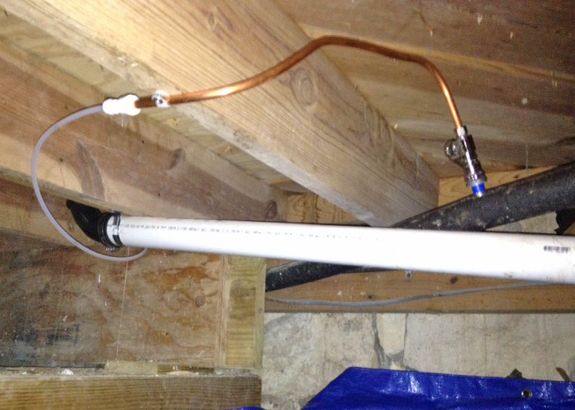
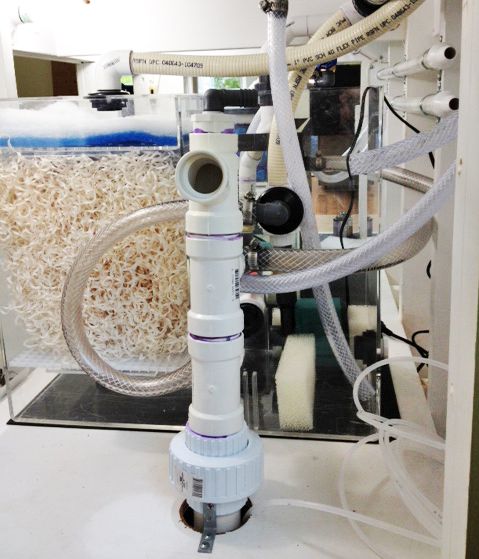
This is the PVC manifold I fabricated, which is the "top" end of what you see under the floor. It serves as both emergency overflow drain for left and right sumps and then as a drain into which I place the end of the siphon, when I am vacuuming the tank...
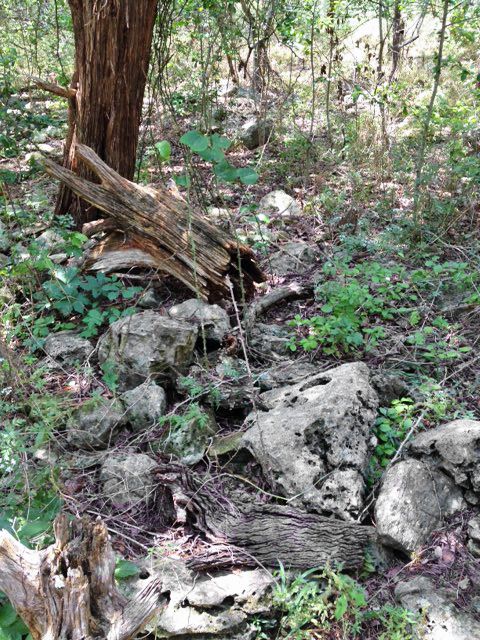
OK, so the tank is now in place and the filtration is ready. Time to decorate the tank. Since we will be keeping Tanganyikan cichlids with our puffer, I wanted to use Limestone for the hardscape. Fortunately our entire county here in Texas is located on what is called the Balcones Escarpment, which is basically solid limestone. This is also known and sold (for ridiculous prices...) as "Texas Holey Rock" among aquarist circles. I say "ridiculous" because it is literally laying all over the ground here in central Texas. Here is how it looks in-situ...
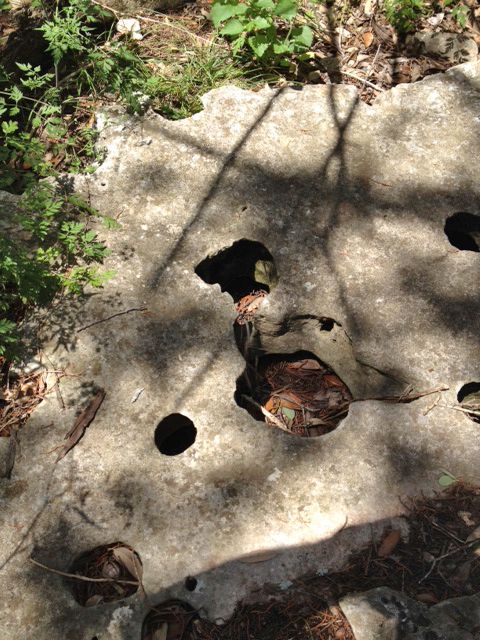
Rainwater, over the eons, flows through and erodes the interesting holes in the limestone...
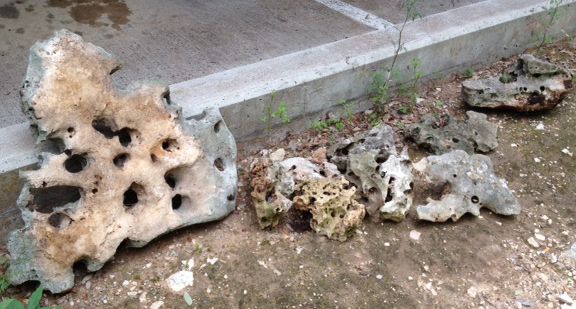
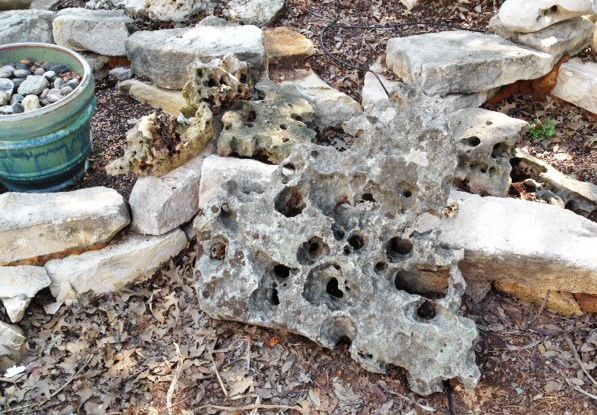
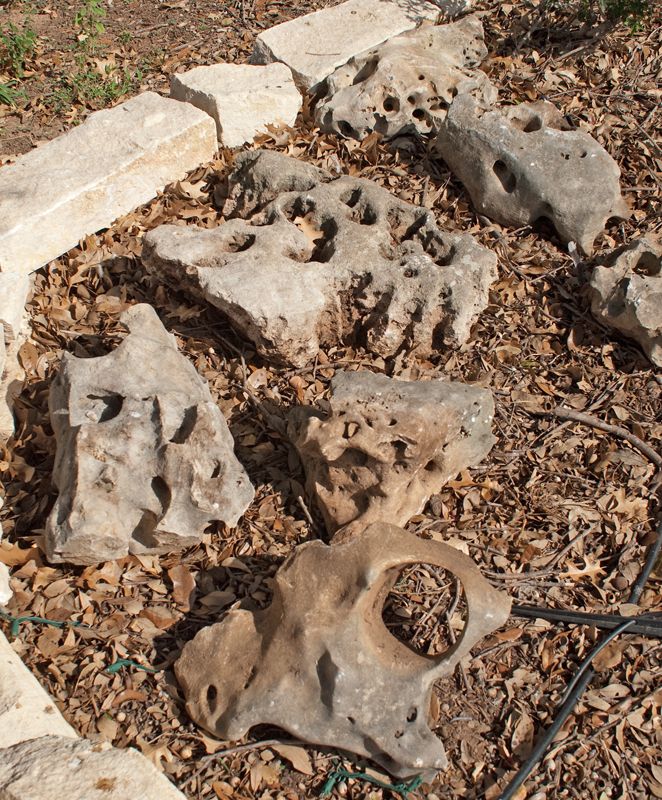
As it is, the limestone is way to "dirty" with organic material to put into the tank, so must be processed beforehand. First, I pressure-wash off all the big pieces of dirt, leaves, etc. Then, each piece is bleached...
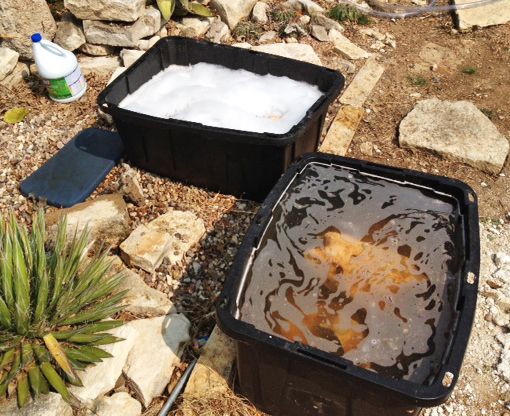
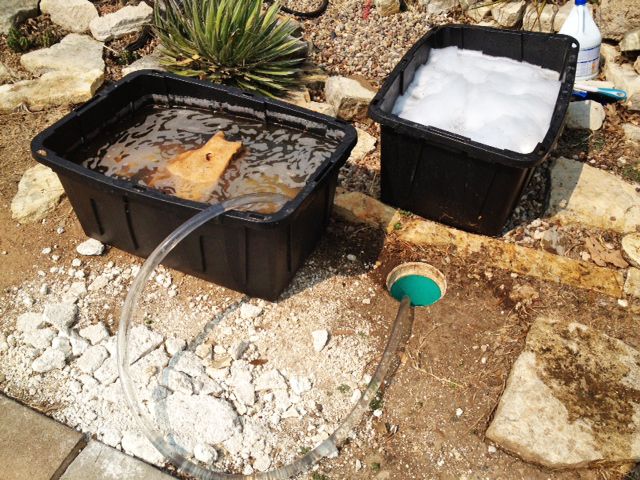
What I am doing is bleaching the rocks in those tubs, then draining the effluent into the sewer cleanout for the house, NOT into the street. You would never want to drain bleach or any other chemical into a municipal waterway, obviously. After thorough rinsing, the pieces are left to dry in the sun...
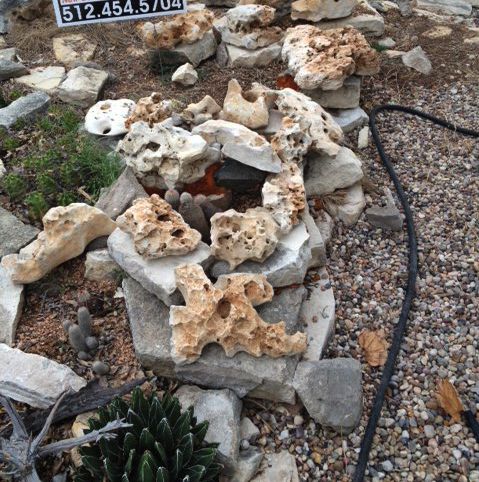
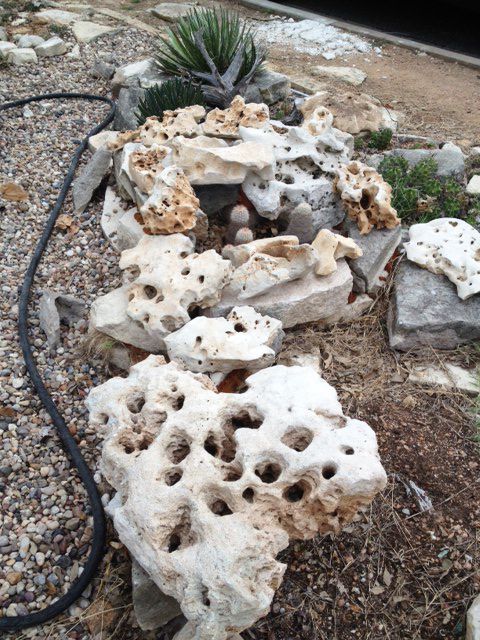
They are now ready for hardscaping. Since the Mbu is so large and could easily knock over a stack or rocks, I am using polyurethane "waterfall foam" to secure the hardscape....
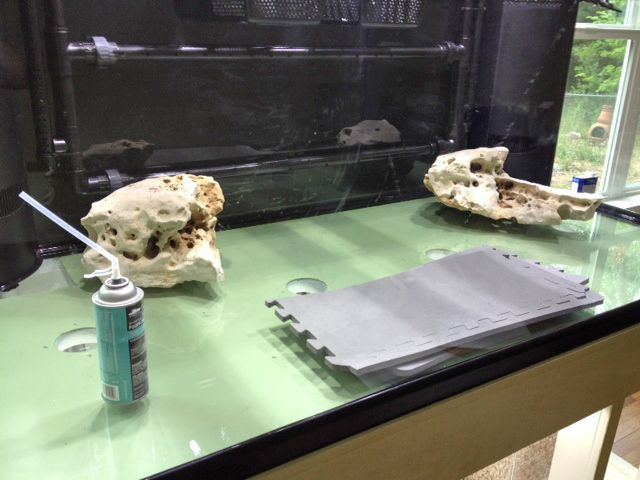
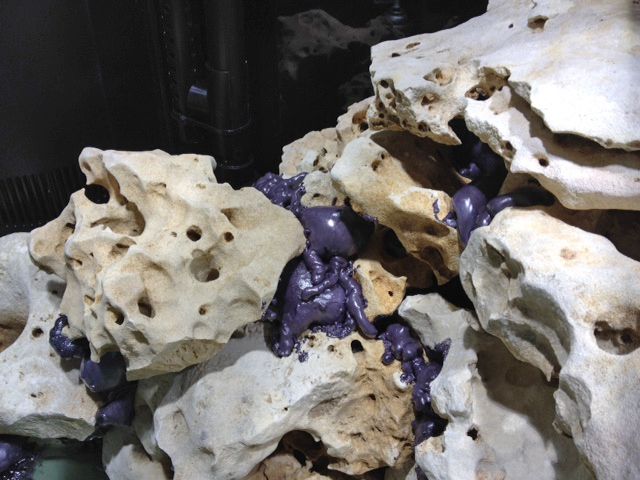
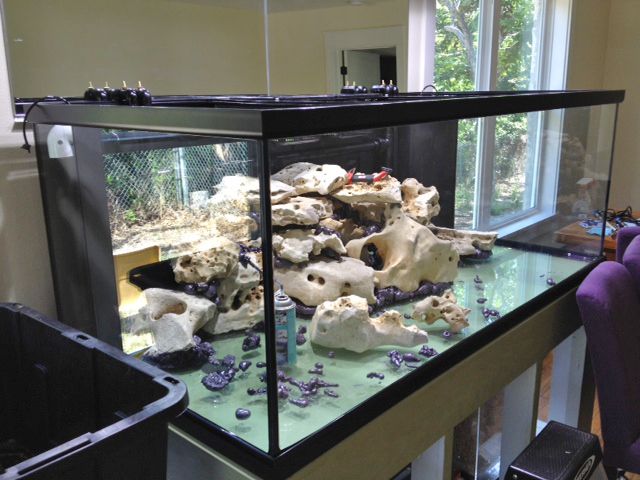
The poly foam tends to "boil up" as it dries and looks un-natural, so I came back the next day and scraped away as much as I could with a small screwdriver, then vacuumed the particles out. That really improved the look. By the way, the substrate is pool filter sand from Home Depot. I like it very much for fish tanks.
OK, the big day arrived. Time to fill the tank and fire up the filters...
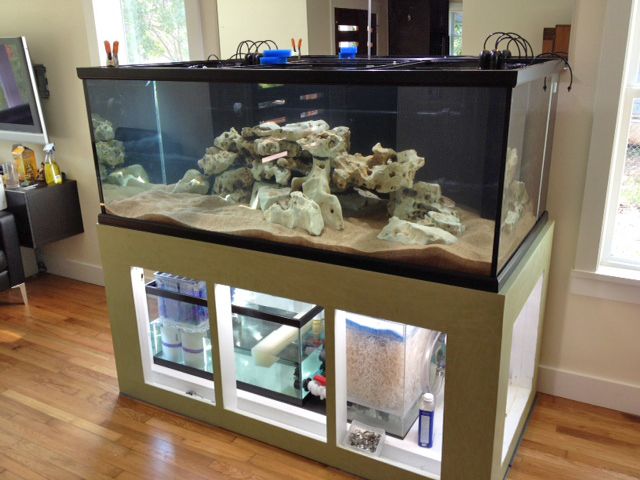
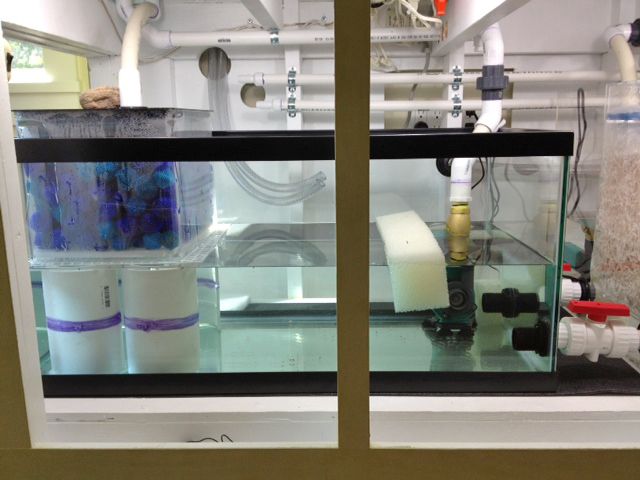
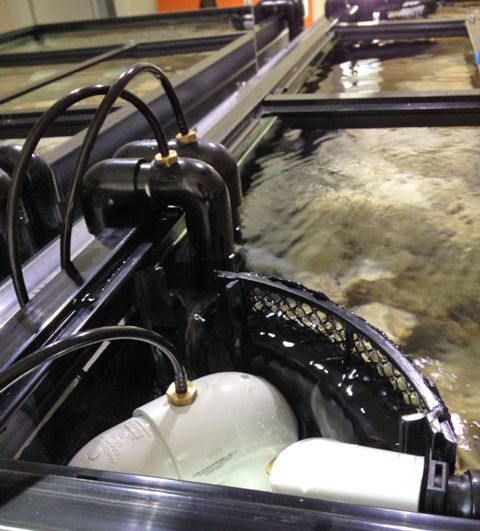
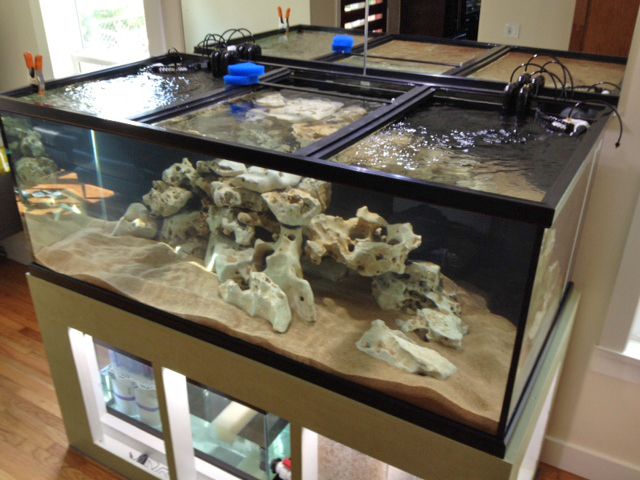
So far, so good. The black manifold you see is one I fabricated for the marineland canisters. Those are air bleed valves on the U's. Time to add the big guy and put the plants in...
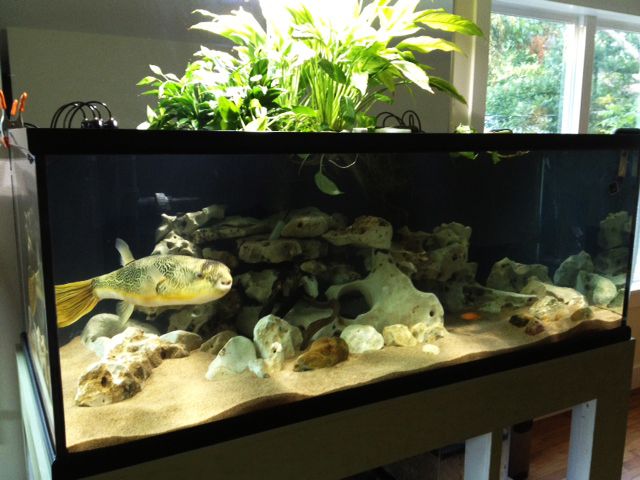
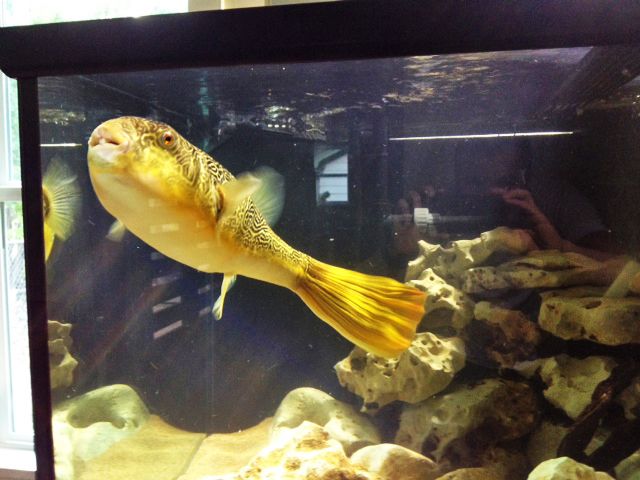
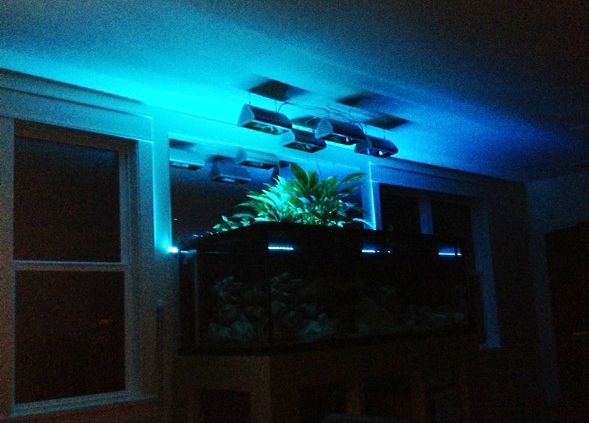
All those pics were taken about four months ago. Fast forward to now (or at least more recenty)...
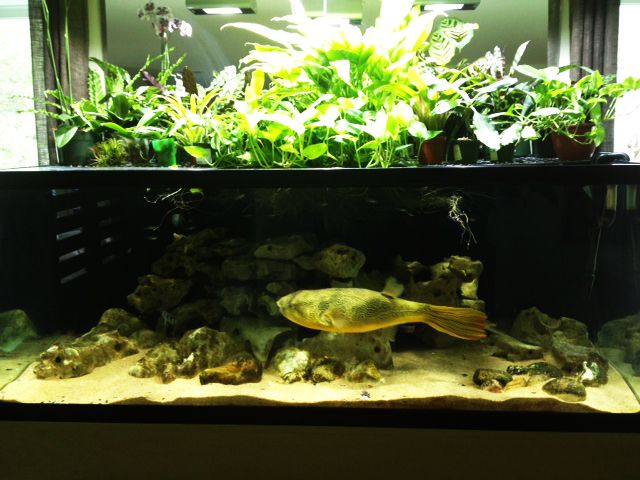
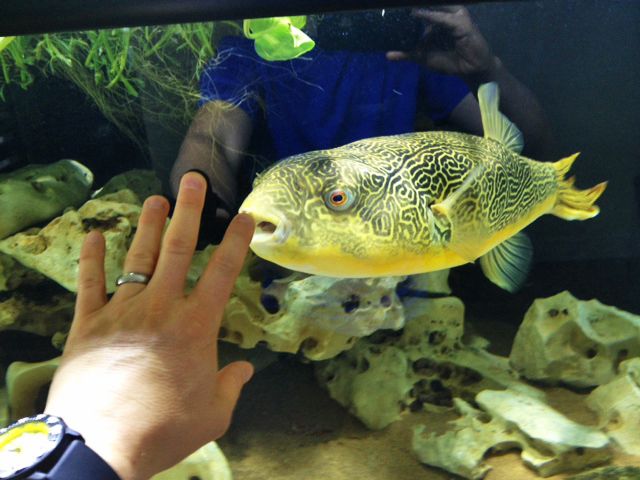
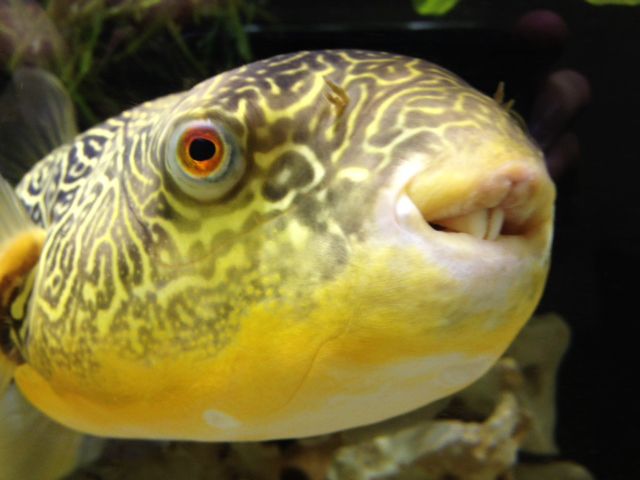
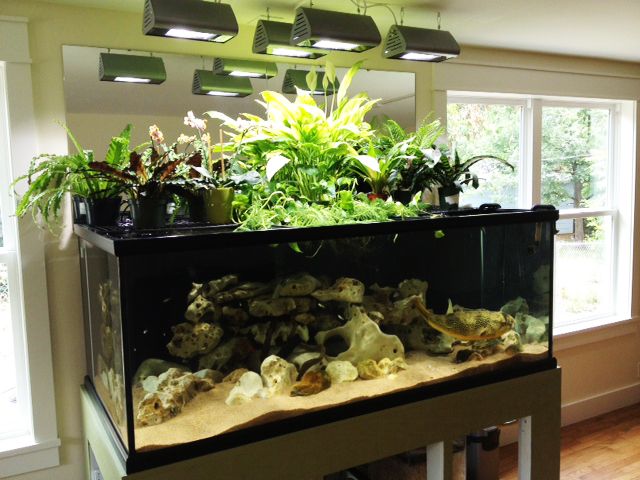
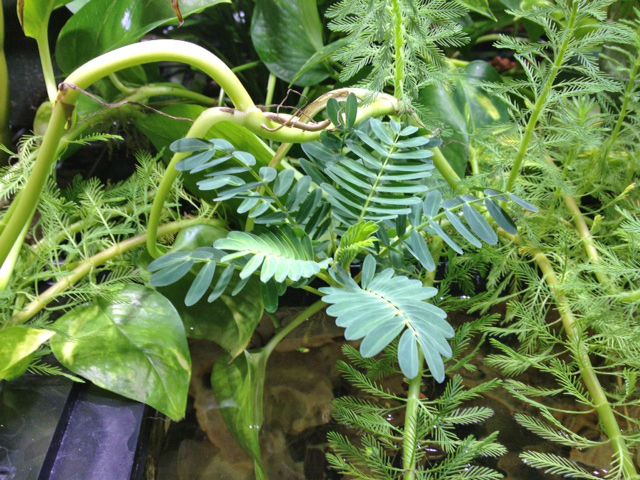
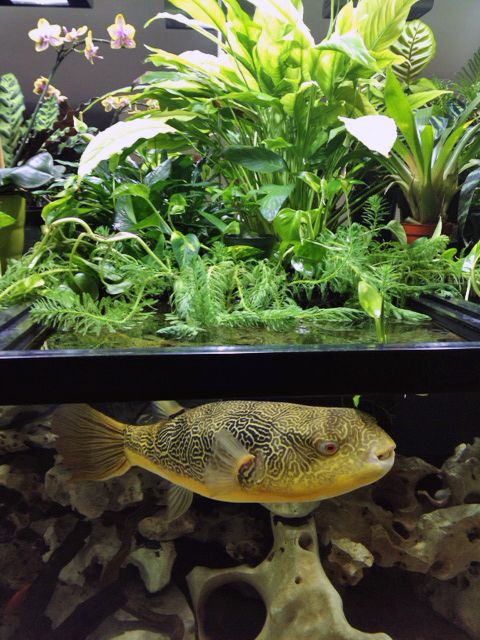
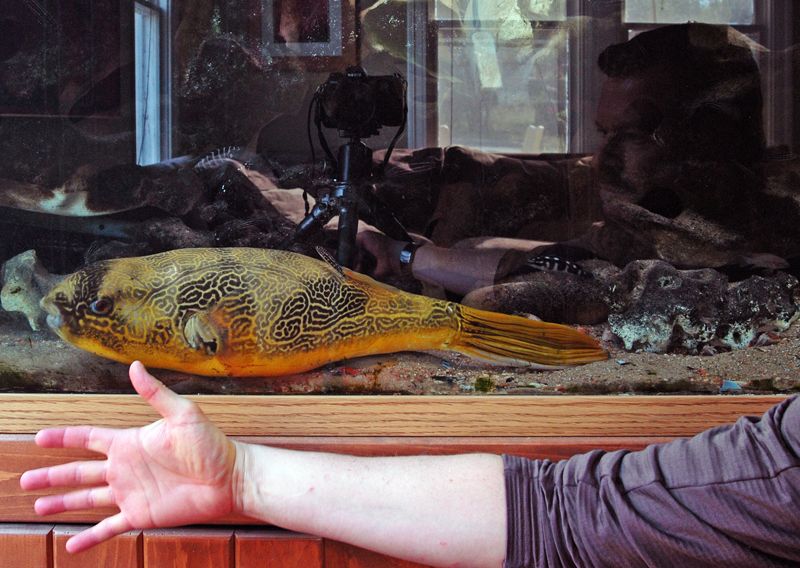
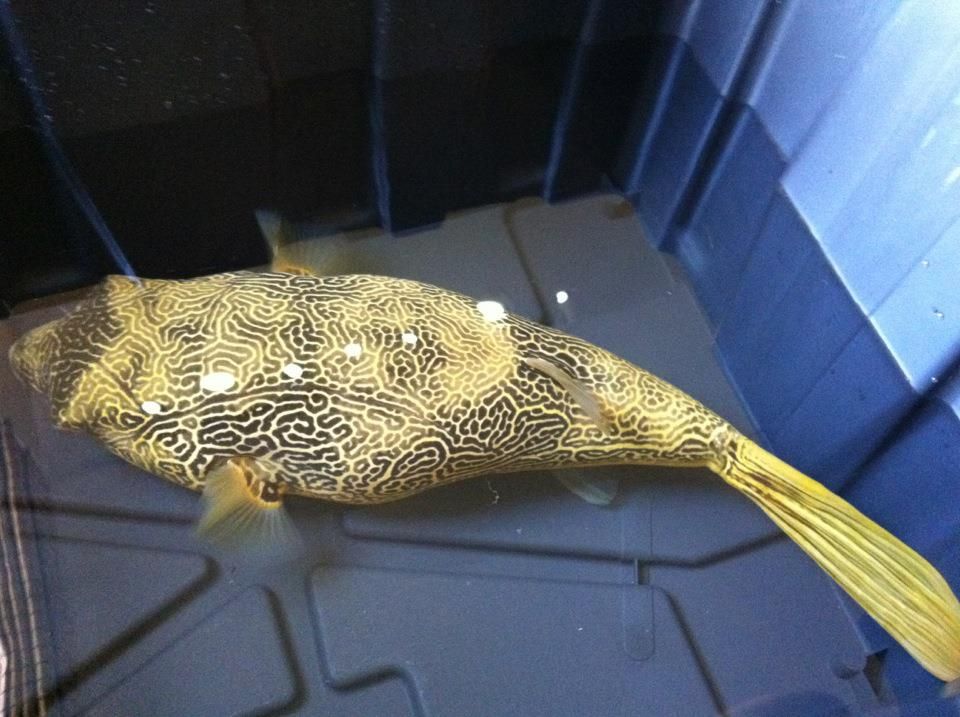
Just a few final notes on these guys. Mbu are not for everyone. In fact, they are not for most fish keepers. But that being said, if you have the room for them and are able to meet their dietary needs (ours eats 3-4 adult crayfish per day), they can be excellent pets. They are hardy and undemanding in regards to water chemistry. Ours has survived two major power outages which killed other tank mates, yet from which he apparently suffered no ill effects. A tank of this dimension (6'x3') would be the bare minimum I would keep one in but I can say that at an adult size of 25" (ours has grown approx. 2" in the last year, which leads me to believe he is at or near adult size. Obviously, fish keep growing throughout their lives, albiet at a much more slow rate), ours has plenty of room to move around and shows no evidence of being cramped in this 300G.
Thank you for allowing me to share and best of luck with your own pufferfish.


