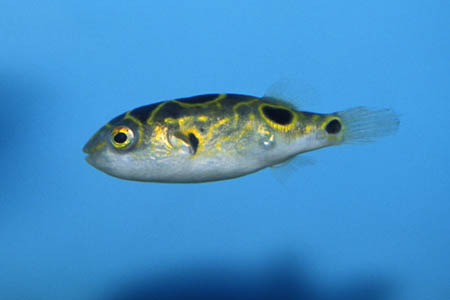
Nerd science backing up RTR
http://www.stri.si.edu/sites/publicatio ... B_STRI.pdf
Sorry I think its phenotypic plasticity.
Genetic similarity defines species.
In the past such morphological differences would have prompted sub species to be named however since we are now in the age of genetic sequencing. People no longer have to only look at phenotypes but can simply compare dna differences between these two to show that they are the same species.
True speciation only occurs when there becomes genetic change in respect to the dna of the organism. These arise from mutations that occur usually in the form of an amino acid being changed during replication of the dna. This can either have no effect, negative effect or positive effect with mutations usually having no effect or a negative one this is in part to why evolution takes so long is because species arise when enough mutations accumulate to create difference usually in the form of an ecological advantage.
Phenotype plasticity changes arise from the same dna so it is not speciation. This is another reason why most speciation occurs allopatric instead of sympatric, because when a population becomes separated allopatrically it usually means there is at least a minor environmental change that makes the new area different then the old. These environmental changes act on the individuals and "choose" + random chance causes some of these to die without reproducing and some to live on and reproduce which eventually turns into a net concentration of certain genes that best fit the new area and will eventually cause speciation to occur.
Also for it to be considered a new species they can't able to mate with f8's or another way to put it there must be post zygotic barriers.
1 M. Turgidus - 29 gallon