Hello,
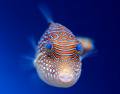
I am new to this forum with many questions. I've done much research on my daughter's little GSP. She brought it home a month or so ago, but now she is off to college and the fish has been in my care. I have begun to love this little fish and would cry if I killed it. I just want to make sure I'm doing everything right. I've managed to keep it alive for two or so weeks now, but I thought it would be a good idea to check on and see if what I'm doing is right.
- the PH in the water is a stable 8.0
- the temperature is a stable 80 degrees
- I'm not sure if this is normal, but his sides and stomach have black on them at times and are white other times
- I feed the puffer snails (for the teeth), bloodworms, ghost shrimp and mealworms
- I've added aquarium salt to make the water brackish
Does this all sound very good, or am I horribly off? Any input is appreciated! Thanks!!
pH, temperature and diet sound good.
Did you add aquarium salt, or marine salt? Aquarium salt will be labeled as such, and is pretty much just salt, which is useless. Your GSP friend needs marine salt, which is actually a formula with major, minor and trace elements to mimic the ocean. GSP's are a brackish/saltwater species, so they need this formula to be healthy.
Do you have a hydrometer? Do you know the salinity of the water?
I use aquarium salt, but is sounds like this is no good. I've never used marine salt before. How does it work? I don't have a hydromoter, though I suspect I will be purchasing one soon. What salinity levels should GSP's have? The puffer is in his own 20 gallon tank (though I am pestering my daughter to upgrade to a 30 gallon or larger). The amonia is 0, as are the nitrates and nitrites. I test it every day. If I am to use marine salt, is it too soon to ween him onto it (I hear they adapt slowly to it in the wild)? There's so much I need to learn. And about the black color on him - is that normal? Thanks again for the quick inputs. They're greatly appreciated.
Yeah you will deffinately need a hydrometer or refractometer. You basically need to raise the salinity by about 0.002 per week, and eventually stop when you get to around 1.015. You will measure these numbers with the hydrometer or refractometer. You're absolutely right about getting a 30 gal for him. No nitrates? Are you sure? I have heard about the colour changes but I can't recall the reasoning etc. so I can't help there.
I'd start acclimating him to brackish right away.
Get a good marine salt formula (ie. Reef Crystals, Instant Ocean etc.) and a swing arm hydrometer that reads from 1.000.
Just mix up water separately with the desired salinity (in this case ~1.002), allowing it to thoroughly dissolve (salt directly into the aquarium will "burn" the fish), and do a partial water change with it (~25%).
Stess? Oh dear, that isn't good. I'm fretting over this fish so much it's absurd. I wonder what could be stressing the little guy out. Is it because he isn't in marine water yet? I'll certainly go and buy some first thing tomorrow. Thanks for the input!
PS - Is it possible to put in too much marine water at once, or bad to have a sudden jump in the salnity? Other than harming the bacteria, does it harm the fish also? And what is the difference between aquarium salt and marine salt?
My Puffers: Puffers I have kept: T lineatus T miurus A modestus T biocellatus C valentini C coranata C papuan C lorteti DPs suvattii burrfish T niphobles
Thanks for the refrence. A lot of the info was helpful, but I still have one question - how much marine salt does it take to raise the salinity .002? Thanks again!
it's kinda guess and check. all marine salts are a little different. so just add a little and mix it up good, give it a few minutes, then see what the salinity is and go from there. I'm not positive, but I think mine is about a 1/4 cup per five gallons will be 1.008.
remember to mix it in something other than the actual tank. I use a five gallon bucket. good luck
-Jase
edmlfc1 wrote:A house without a puffer is not a home.
My Puffers: Puffers I have kept: T lineatus T miurus A modestus T biocellatus C valentini C coranata C papuan C lorteti DPs suvattii burrfish T niphobles
As for harming the fish with a jump in salinity; it's a complicated answer.
A GSP is a highly euryhaline fish, and in the wild they are accustomed to constant variations in salinity; therefore a fish newly adapted to aquarium life will likely have no problem adjusting to various salinities.
However, if the fish has been in captivity for a long period and is used to constant salinity, than a sudden drastic salinity change may stress them considerably.
Fish have the uncanny ability to adapt to the conditions we place them in; however their tolerance for change decreases with the increase of their familiarity.
Puffpuff3 wrote:And what is the difference between aquarium salt and marine salt?
Aquarium salt does not contain calcium chloride. Marine salt does, and it also contains other things which would be found in sea water. So basically marine salt is made to replicate sea water, but aquarium salt is just really for treating illness.
And yeah like CoreyK said, GSPs switch around a bit in the wild, meaning they can withstand changes in salinity, unlike most other fish. But even so they should not just be taken out of a freshwater aquarium and dropped straight into a saltwater one, they still need to be acclimated to SW. Which makes sense when you think about it cause in the wild if they were swimming between FW and SW, the change in salinity gradually changes as they move towards or away from the sea. And they would not just swim straight there, they would stop to eat and rest etc. so the change would end up being very gradual. But yeah sorry for basically repeating what people have already said.


 I wonder what could be stressing the little guy out. Is it because he isn't in marine water yet? I'll certainly go and buy some first thing tomorrow. Thanks for the input!
![[welcome]](./images/smilies/welcome.gif "welcome")