
If the fish is still eating, treating the food is a lot more effective than treating the water.
However, if the fish is no longer eating, treating the water or force feeding are the only remaining options and treating the water can work, I've done it, I've had friends who have done it. It just takes longer and isn't as effective, but it can get the fish healthy enough to start accepting food again, at which point you can go the more effective route of feeding the treated food. Hopefully most people realize what their problem is and start adding dewormer to the food before it comes to the point that the fish no longer eats.
Another dead DP.... died in the dark?
Forum rules
Read this before posting!!
Since this board has been up, we have found there are several questions that routinely get asked in order to help diagnose problems. If you can have that information to begin with in your post, we'll be able to help right away (if we can!) without having to wait for you to post the info we need.
1) Your water parameters - pH, Ammonia, Nitrite, Nitrates and salinity (if appropriate). This is by far the most important information you can provide! Do not answer this with "Fine" "Perfect" "ok", that tells us nothing. We need hard numbers.
2) Tank size and a list of ALL inhabitants. Include algae eaters, plecos, everything. We need to know what you have and how big the tank is.
3) Feeding, water change schedule and a list of all products you are using or have added to the tank (examples: Cycle, Amquel, salt, etc)
4) What changes you've made in the tank in the last week or so. Sometimes its the little things that make all the difference.
5) How long the aquarium has been set up, and how did you cycle it? If you don't know what cycling is read this: Fishless Cycling Article and familiarize yourself with all the information. Yes. All of it.
We want to help, and providing this information will go a LONG way to getting a diagnosis and hopeful cure that much faster.
While you wait for assistance:
One of the easiest and best ways to help your fish feel better is clean water! If you are already on a regular water change schedule (50% weekly is recommended) a good step to making your fish more comfortable while waiting for diagnosis/suggestions is to do a large water change immediately. Feel free to repeat daily or as often as you can, clean water is always a good thing! Use of Amquel or Prime as a dechlor may help with any ammonia or nitrite issues, and is highly recommended.
Note - if you do not normally do large water changes, doing a sudden, large water change could shock your fish by suddenly changing their established water chemistry. Clean water is still your first goal, so in this case, do several smaller (10%) water changes over the next day or two before starting any large ones.
Read this before posting!!
Since this board has been up, we have found there are several questions that routinely get asked in order to help diagnose problems. If you can have that information to begin with in your post, we'll be able to help right away (if we can!) without having to wait for you to post the info we need.
1) Your water parameters - pH, Ammonia, Nitrite, Nitrates and salinity (if appropriate). This is by far the most important information you can provide! Do not answer this with "Fine" "Perfect" "ok", that tells us nothing. We need hard numbers.
2) Tank size and a list of ALL inhabitants. Include algae eaters, plecos, everything. We need to know what you have and how big the tank is.
3) Feeding, water change schedule and a list of all products you are using or have added to the tank (examples: Cycle, Amquel, salt, etc)
4) What changes you've made in the tank in the last week or so. Sometimes its the little things that make all the difference.
5) How long the aquarium has been set up, and how did you cycle it? If you don't know what cycling is read this: Fishless Cycling Article and familiarize yourself with all the information. Yes. All of it.
We want to help, and providing this information will go a LONG way to getting a diagnosis and hopeful cure that much faster.
While you wait for assistance:
One of the easiest and best ways to help your fish feel better is clean water! If you are already on a regular water change schedule (50% weekly is recommended) a good step to making your fish more comfortable while waiting for diagnosis/suggestions is to do a large water change immediately. Feel free to repeat daily or as often as you can, clean water is always a good thing! Use of Amquel or Prime as a dechlor may help with any ammonia or nitrite issues, and is highly recommended.
Note - if you do not normally do large water changes, doing a sudden, large water change could shock your fish by suddenly changing their established water chemistry. Clean water is still your first goal, so in this case, do several smaller (10%) water changes over the next day or two before starting any large ones.

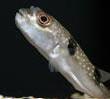
Re: Another dead DP.... died in the dark?
What does it mean when the puffer's lips turn dark?
-
spoot

- Green Spotted Puffer
- Posts: 360
- Joined: Mon Dec 11, 2006 5:21 am
- My Puffers: T. fluviatilis 2x
C. travancoricus - Location: Vancouver
Re: Another dead DP.... died in the dark?
Not sure what you are referring to. Is the area around the DP's mouth dark? Or is the belly dark as well?
Re: Another dead DP.... died in the dark?
It's just the lips, kind of as if he has a bruise... Perhaps it's food in his mouth? but it doesn't look like it.