Page 1 of 2
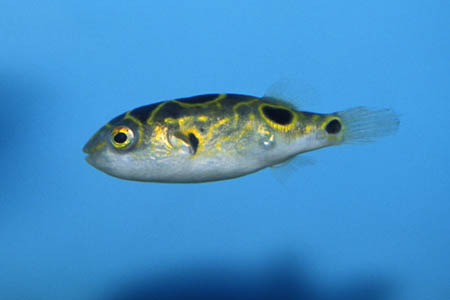
PUFFER EXPERTS: Figure 8 Puffer Variations?
Posted: Thu May 17, 2012 1:12 pm
by sgtmyers88
Re: PUFFER EXPERTS: Figure 8 Puffer Variations?
Posted: Thu May 17, 2012 2:18 pm
by bertie 83
We humans vary alot too. It could be a regional difference or just the way they are. I would be interested to know if there are any behavioural differences between them tho.
Re: PUFFER EXPERTS: Figure 8 Puffer Variations?
Posted: Thu May 17, 2012 3:16 pm
by Nuclear_Glitter
It's probably like with GSP there seems to be variations, and I mean logically, why wouldn't there be? I doubt we ever actually find someone who knows 100% for sure because not many people study puffers. Perhaps RTR can chime in on the behavioral differences though since he owned so many F8s.
Re: PUFFER EXPERTS: Figure 8 Puffer Variations?
Posted: Thu May 17, 2012 3:19 pm
by kcartwright856
Also keep in mind that coloration changes throughout the day and depending on water quality or lack thereof.
And cameras/monitors do not always capture color correctly.
Re: PUFFER EXPERTS: Figure 8 Puffer Variations?
Posted: Thu May 17, 2012 3:36 pm
by FADE2BLACK_1973
Oh man, I wish I could find the link about pretty much the same subject as we are talking about now. I believe it was around sometime last year. I will still have to look for it.
Some figure 8's has really broken up patterns campare to the kinds you normally see. We was even decusin that we wondered if these different pattern marked F8's could be caused by maybe different collection locations in the wild. Some might be more northern species and some might be more southern species. Not certain but it was talked about.
Re: PUFFER EXPERTS: Figure 8 Puffer Variations?
Posted: Thu May 17, 2012 7:17 pm
by Pufftastic
I remember that thread too, Chris. It was interesting. I remember thinking that the next time I had an opportunity to view a tank full of same-age F8s at the LFS, I'd pay attention to their markings and see if they were all similar (either wide stripes, or intricate curlicues, or whatever) or if there was a lot of variation between them, since they presumably would be caught at the same time and place.
Re: PUFFER EXPERTS: Figure 8 Puffer Variations?
Posted: Thu May 17, 2012 10:08 pm
by FADE2BLACK_1973
Pufftastic wrote:I remember that thread too, Chris. It was interesting. I remember thinking that the next time I had an opportunity to view a tank full of same-age F8s at the LFS, I'd pay attention to their markings and see if they were all similar (either wide stripes, or intricate curlicues, or whatever) or if there was a lot of variation between them, since they presumably would be caught at the same time and place.
I seriously wish I could find that thread or atleast someone could but dont remember what the topic or OP was...lol.
And all the ones that sgtmyers88 posted looked alot alike, that average F8 markings. Just a bit differently marked but your average markings though. The ones we was thinking about had some really wierd looking patterns that came out in the same shipment from someones lfs.
Re: PUFFER EXPERTS: Figure 8 Puffer Variations?
Posted: Fri May 18, 2012 9:50 am
by RTR
Puffer markings are not that stable. I have no problems with variations in the Figure 8's figure-8. Some of them are nowhere near an 8. This species does not have nearly the geographic range of the GSP, so does not shown anything like the variabiilty of that species (if GSPs are really all one species - there are IMHO too many variants there. There are likely to be mutiple species or sub-species or regional variants. Any degree of isolation leads to variation or even speciation).
The dorsal markings of the F-8 are not species determinants. The two eyespots on each side are. To me and to the hobby, if it has the two eyespots (and other less obvious characteristics) they are F-8s.
Puffers also have huge individual differences in personality. Those are not species characteristics either. The dorsal marking gave them their common name, but have nothing to do with speciation. I have not seen any correlation between marking between F-8 and their care in captivity. The only captive care needs I have seen is at least light BW (1.003 - 1.005) plus higher alkalinity (KH) than that amount of marine mix will provide, so I use only aragonite substrates, mostly with OE-RFUG. Fresh aragonite may need to be added every 3-5 years, as I do not use thick substrates (1/2-1").
HTH
Re: PUFFER EXPERTS: Figure 8 Puffer Variations?
Posted: Fri May 18, 2012 11:51 am
by Corvus
I agree with RTR: T. biocellatus probably are one species, while GSPs probably are at least 3 species or subspecies or at least regional variants, including the giants T. cf. sabahensis and the T. sabahensis.
Re: PUFFER EXPERTS: Figure 8 Puffer Variations?
Posted: Fri May 18, 2012 11:55 am
by J-P
That reminds if a phrase: "All Greeks are Greek, but all Canadian's aren't."
Re: PUFFER EXPERTS: Figure 8 Puffer Variations?
Posted: Fri May 18, 2012 12:34 pm
by sgtmyers88
I was referring that most puffer species such as GSP's, Fahakas, and Porcs, usually have the same overall colors with each specimen of the respective species but the F8 seems to be the most diverse in color variation (the only other aquarium fish that I know off the top of my head that has this much diversity in coloration is in the goldfish family) which is why I picked out the images above and posted them to aid in my speculation. Note how the specimens above have a color range of black, brown, or green colored backs. While other puffers such as your commonly seen GSP has the greenish/yellowish back and white belly with black spots.
Re: PUFFER EXPERTS: Figure 8 Puffer Variations?
Posted: Fri May 18, 2012 4:25 pm
by FADE2BLACK_1973
The markings of the Figure 8's are more like finger prints but has those 2 eyes spots on both sides which make them Figure 8's. I agree.
Re: PUFFER EXPERTS: Figure 8 Puffer Variations?
Posted: Sat May 19, 2012 7:42 am
by RTR
I have to disagree.
Fahakas are much more uniform in color & markings than most puffers, but all puffers are quite responsive to their environment in perceived color - they darken or lighten by environmental lighting and time of day. Most muddy their marking during sleep.
Cichlids can and do have massive color variations within a species. Ditto many livebearers. Ditto tank bred barbs. Color variation is common as dirt among many fish. It is an adaptive trait.
Re: PUFFER EXPERTS: Figure 8 Puffer Variations?
Posted: Sat May 19, 2012 10:01 am
by puffykid
Nerd science backing up RTR
http://www.stri.si.edu/sites/publicatio ... B_STRI.pdf
Sorry I think its phenotypic plasticity.
Genetic similarity defines species.
In the past such morphological differences would have prompted sub species to be named however since we are now in the age of genetic sequencing. People no longer have to only look at phenotypes but can simply compare dna differences between these two to show that they are the same species.
True speciation only occurs when there becomes genetic change in respect to the dna of the organism. These arise from mutations that occur usually in the form of an amino acid being changed during replication of the dna. This can either have no effect, negative effect or positive effect with mutations usually having no effect or a negative one this is in part to why evolution takes so long is because species arise when enough mutations accumulate to create difference usually in the form of an ecological advantage.
Phenotype plasticity changes arise from the same dna so it is not speciation. This is another reason why most speciation occurs allopatric instead of sympatric, because when a population becomes separated allopatrically it usually means there is at least a minor environmental change that makes the new area different then the old. These environmental changes act on the individuals and "choose" + random chance causes some of these to die without reproducing and some to live on and reproduce which eventually turns into a net concentration of certain genes that best fit the new area and will eventually cause speciation to occur.
Also for it to be considered a new species they can't able to mate with f8's or another way to put it there must be post zygotic barriers.
Re: PUFFER EXPERTS: Figure 8 Puffer Variations?
Posted: Sun May 20, 2012 12:38 am
by FADE2BLACK_1973
Yep thats nerd science aright....lol...jk But interesting.