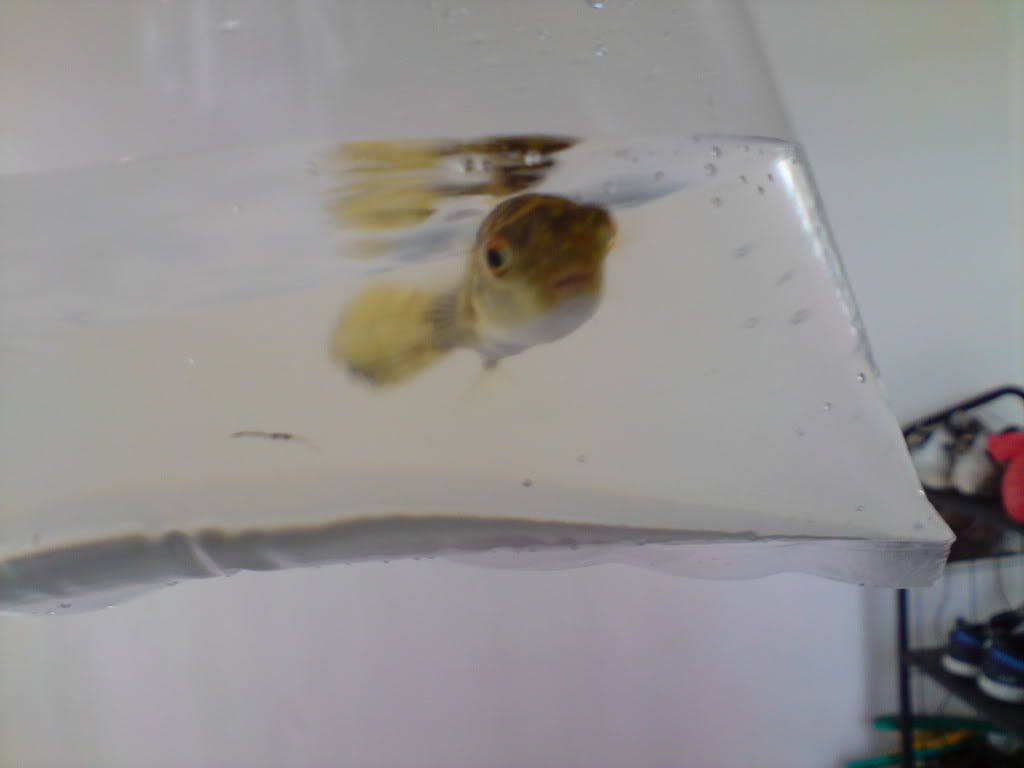
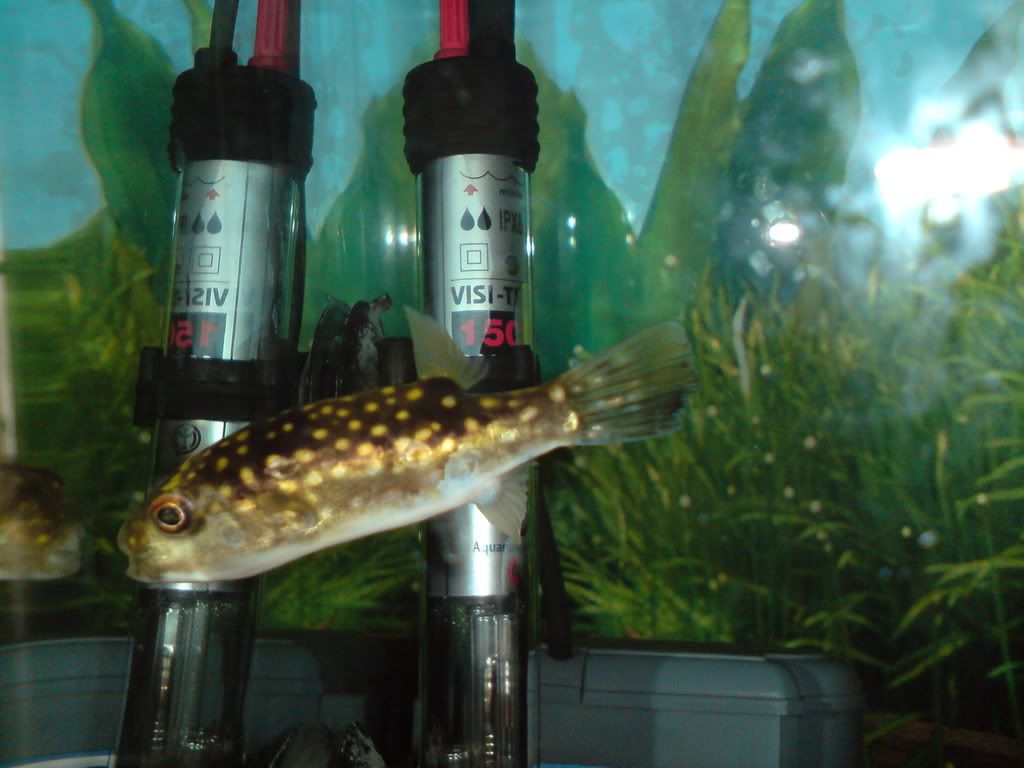
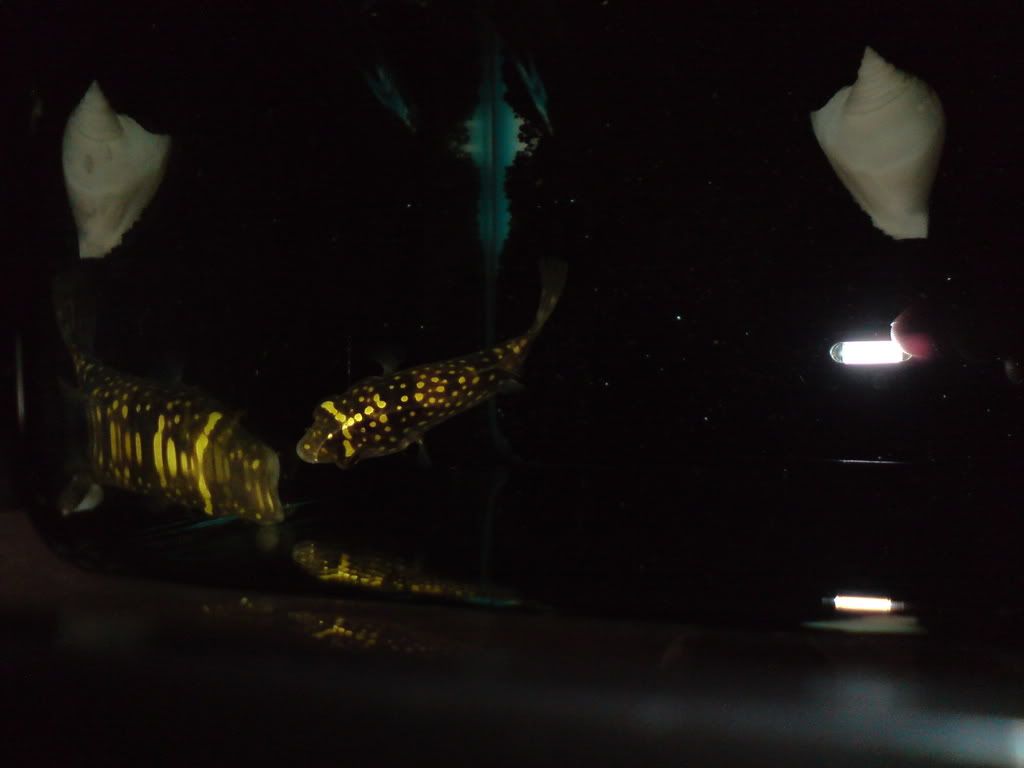
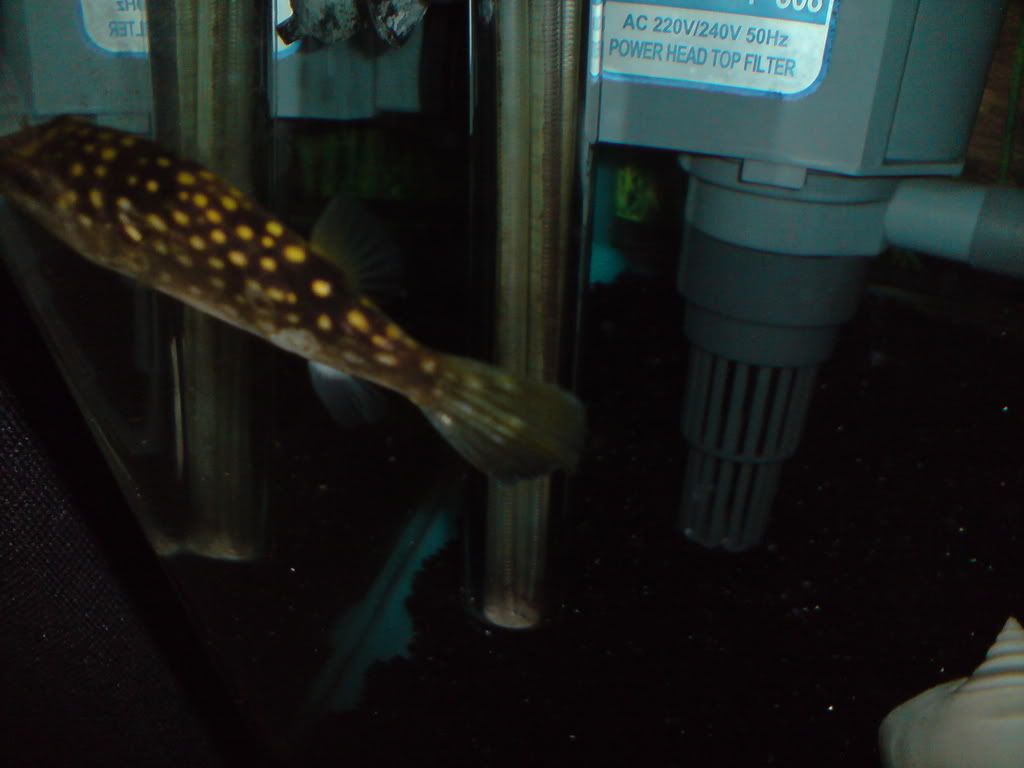
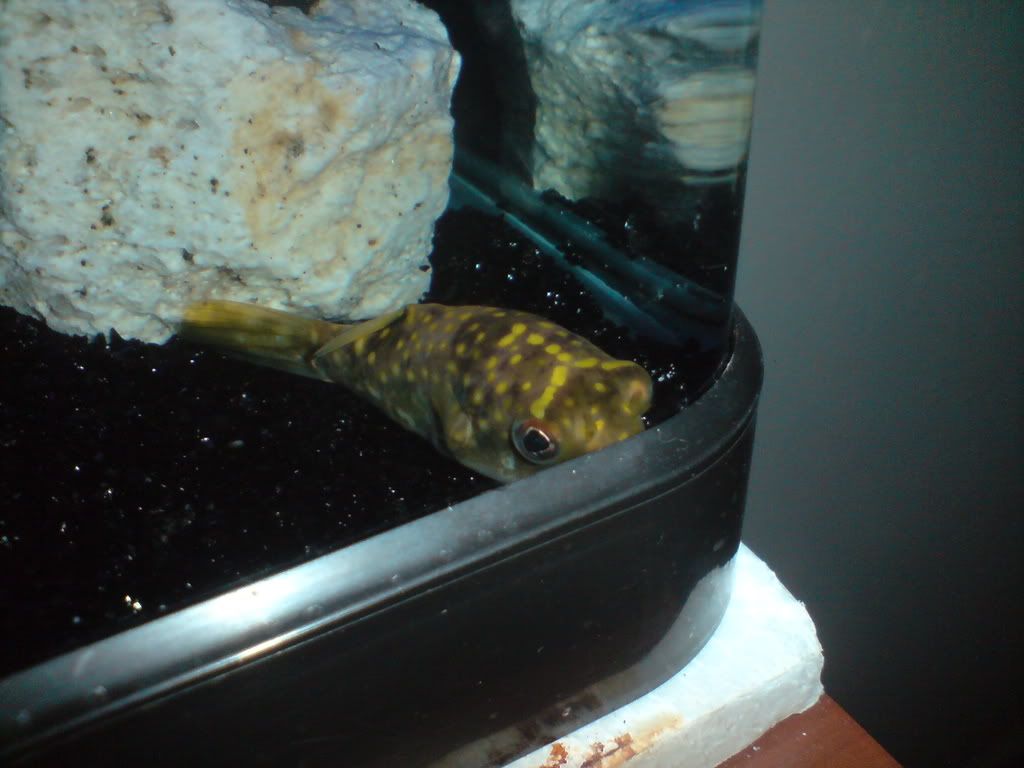




Ya I have never seen this kind but I believe I read that Chelonodon's (Patoca) can be either Gray or brown with spots. None of mine look like yours (color-wise, but the body shape is similar, not identical) but it is always a possibility that there was a morph and you got lucky. There is another kind of Chelonodon that I would LOVE to get my hands on, its called a Blaasop beauty ( Chelonodon Pleurospilus ) but I have never heard anyone speak its name.Pufferpunk wrote:It seems the Chelonodon species do a lot of swimming through the different salinities, huh?
 Problem is - I thought the Chelonodons were all mostly SW. The LFS told you yours was FW ??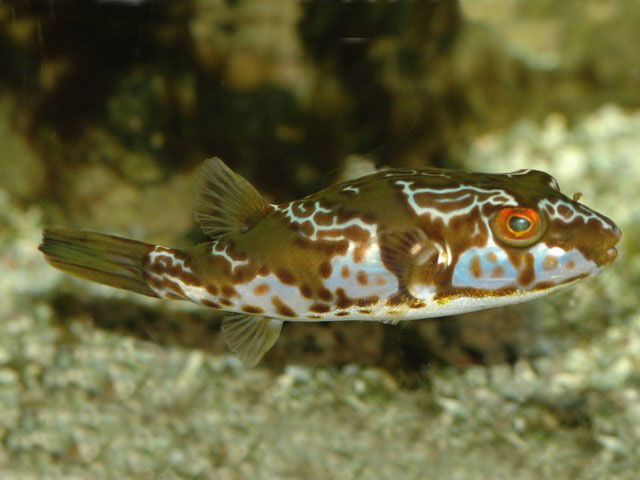
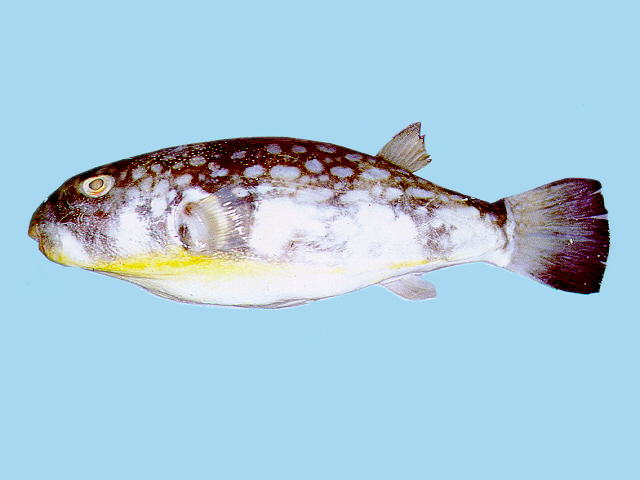
Yes Corvus - you are absolutely right. I can't believe I forgot about the fact that the fish from the original descriptions have changed over the last 200-300 years. 1700 - 2000. DUH!Corvus wrote:Really, you have to look at the originals from the first descriptions e.g. Hamilton etc. These are nothing like those internet pictures. And the ones from the first descriptions are the ones that count. The original C. patoca have yellow spots, no white ones.
Yes but there is also no indication that is isn't possible. We couldn't possibly know without trying it and we can't possibly try it because we don't have 1) the fish necessary 2) Anyone willing to try. You can tell me that a Frog and an Elephant will never interbreed and I will believe you - because they are simply too different. But why throw the idea out for fish that are actually quite similar ?This thing is much more complicated than you might think.
Why should Chelonodon interbreed? There is no indication at all that this is possible.
As for this one - my bad, I have never seen one and I posted the pics rather quickly. My mistake. But I do agree that it does not look like a Chelonodon at all. I apologize >.<Oh, and this C. laticeps you are showing is certainly no laticeps no matter what the photographer/fishbase says.
Sarcasm? They had yellow spots at the time they were collected and do simply not look like the ones later named C. patoca, the ones you bought as patoca and the ones almost always imported as C. pactoca. Visit a library get the first decription look at the illustration and read the description. Much more fit with the ones shown above than with the ones usually called patoca.Umbrella wrote:Yes Corvus - you are absolutely right. I can't believe I forgot about the fact that the fish from the original descriptions have changed over the last 200-300 years. 1700 - 2000. DUH!
That's simple... they would not be seperate species if they could. Their distribution is widely overlapping. If they could crossbreed they would be one population and one species. Fish populations with the ability to crossbreed can only be recognized as different species if their ranges only slightly overlap or don't overlap at all.Could you maybe clarify a little bit why you are so against the idea of them being able to crossbreed ?
No no no! No sarcasm at all. I want to learn from you. I apologize if it seemed I was being sarcastic. I was was angry at myself for forgetting the obvious. I want to find these original descriptions you speak of BUT I can't seem to find anywhere that lets me view such documents without charging me. I def. don't want to spend $$ on a document that might have nothing to do with what I was looking for. You have told me many times to look for these and I am trying but I can't seem to find ANY!Sarcasm? They had yellow spots at the time they were collected and do simply not look like the ones later named C. patoca, the ones you bought as patoca and the ones almost always imported as C. pactoca. Visit a library get the first decription look at the illustration and read the description. Much more fit with the ones shown above than with the ones usually called patoca.

Ahhh. Ok that makes sense. Lol, so to answer my own question earlier - Yes, I am wrong. They can not Inter-breed.That's simple... they would not be seperate species if they could. Their distribution is widely overlapping. If they could crossbreed they would be one population and one species. Fish populations with the ability to crossbreed can only be recognized as different species if their ranges only slightly overlap or don't overlap at all.

