Page 2 of 3
Re: What are the growth rate of MBU puffers?
Posted: Tue Jun 11, 2013 12:27 pm
by Pufferpunk
I soak ALL my fish's foods in Vita-Chem, to improve nutritional value.
Re: What are the growth rate of MBU puffers?
Posted: Tue Jun 11, 2013 11:01 pm
by PufferGhoti
The thing is a variety of foods, yes enhancing the food source with amino-acids and garlic etc... is positive as we have always done. but flow stimulation in the tank is something we seem to be getting positive feedback with, pattern coloration, attentiveness etc. our Mbu knows who's coming down to the basement by the individuals vibrations... also assessed the likeliness of food and will go into the appropriate display mode (Pavlov's dog etc..) but I am beginning to feel giving complexity of flow patterns adds to the situation. after all if you are in a small department with a flow swimming pool you are likely to take a healthy dip rather than lounge on the couch/sofa.
Since we put the original powerhead in our Mbu is more muscular and display improved color (anecdotal), (s)he also perks up with water changes and as usual we overfilter with two "Marineland"-style cannister filters with a rating of 720gallons an hour combined with 2x9W UV and growing at a prestigious rate...
Re: What are the growth rate of MBU puffers?
Posted: Wed Jun 12, 2013 8:36 am
by RTR
Agree strongly w/Pufferpunk's and PufferGhoti's comments above. Variety in foods is a non-trivial benefit, as are variety in currents and decor (especially for the hunter-predators) and clean water is frankly basic to all captive fish. We see too many fat puffers with very poor configurations - those are not healthy fish.
I really don't like mixed tanks w/most FW/BW puffers. In all honesty, I don't like or do "community" tanks with many fish at all. In my experience, I only get long, healthy lifespans in specimen or single-species tanks (which may have "helpers or workers who occupy separate niches from the specimen fish displayed. I really amazes me how long such fish live and how well they do in captivity. Like most folks in this hobby, I started with community tanks, but soon found out how much better specimen non-schooling fish did in species tanks, especially if they can see and interact with con-specifics (others of the same species) or similar species IF their interactions are restricted by separate but adjacent tanks. It may be better still if there is water exchange between the tanks. Most hobby fish are definitely harmed by undersized tanks and insufficient care. The hobby is definitely harmed by the common practice of over-stoked and under-maintained tanks. Most folks attention spans are too short to handle pets long term. They sadly do not realize what they are missing.

Re: What are the growth rate of MBU puffers?
Posted: Fri Jun 14, 2013 11:37 pm
by wahoosotto
Hi guys!
I totally agree with everything that was said in posts above. Btw did I understand right? Putting a current in the tank is benificial for our pets in terms of posture, health and growth?
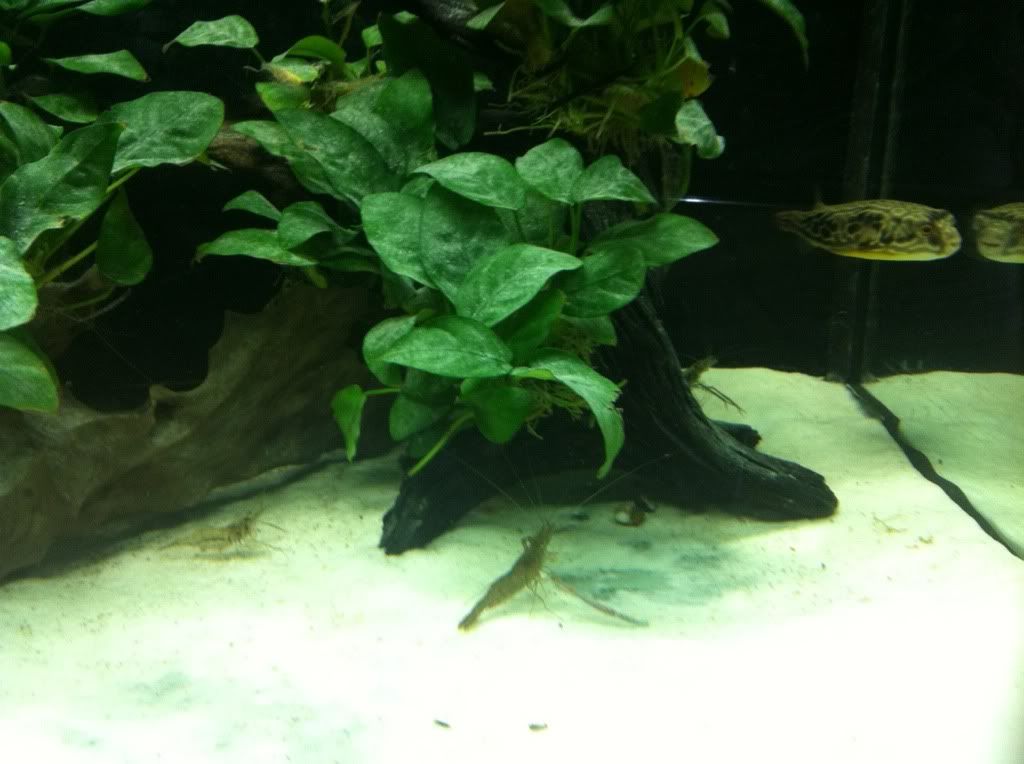
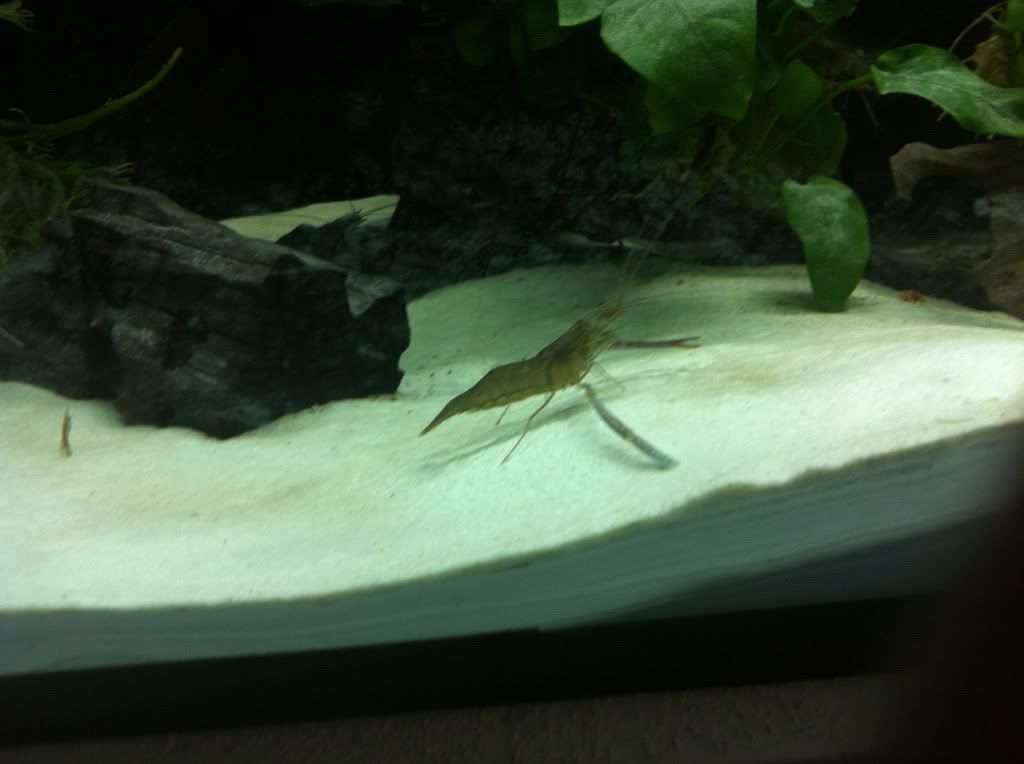
Btw here is her current food source. Live long armed shrimps. I placed about 10 in the tank and everynight (s)he eats about 3. My staff has a source in the market that brings her live ones that she brings to my house.
http://i124.photobucket.com/albums/p15/ ... 731971.jpg
http://i124.photobucket.com/albums/p15/ ... 90ec47.jpg
Re: What are the growth rate of MBU puffers?
Posted: Sat Jun 15, 2013 6:51 am
by RTR
Live food is best quarantined for at least two weeks, better for up to 4 weeks in tanks without fish. This is insurance that there is no transmission of fish disease with water from the shrimp. Fish (vertebrates) diseases generally cannot survive long without fish in the tank. The short period is generally enough to ensure that. The longer period allows extra time to feed the to-be-food shrimp to ensure that they are well nourished and thus the most nutritious themselves and so provide the best nutrition for the puffer.
Puffers in the wild will eat whenever food is available, they lack appetite suppressants. That means that captive fish will easily and routinely over-eat and become fat/obese. That puts extra strain on their tank water, and unhealthy fat on the fish. Both of those will long-term shorten the life of the fish. Try to avoid over-feeding. Due to their lack of ribs, it is easy to see masses of food in a puffer's belly. Feed them enough to show a lightly rounded belly, but not a grossly extended one. Feed again when the belly flattens a bit. This may be everyday or every other day for young, active, and growing fish. For mature fish ot may be every other day to as little as once or twice a week for full adults of rather inactive lurker-predators.
HTH
Re: What are the growth rate of MBU puffers?
Posted: Sat Jun 15, 2013 8:29 am
by wahoosotto
RTR wrote:Live food is best quarantined for at least two weeks, better for up to 4 weeks in tanks without fish. This is insurance that there is no transmission of fish disease with water from the shrimp. Fish (vertebrates) diseases generally cannot survive long without fish in the tank. The short period is generally enough to ensure that. The longer period allows extra time to feed the to-be-food shrimp to ensure that they are well nourished and thus the most nutritious themselves and so provide the best nutrition for the puffer.
Puffers in the wild will eat whenever food is available, they lack appetite suppressants. That means that captive fish will easily and routinely over-eat and become fat/obese. That puts extra strain on their tank water, and unhealthy fat on the fish. Both of those will long-term shorten the life of the fish. Try to avoid over-feeding. Due to their lack of ribs, it is easy to see masses of food in a puffer's belly. Feed them enough to show a lightly rounded belly, but not a grossly extended one. Feed again when the belly flattens a bit. This may be everyday or every other day for young, active, and growing fish. For mature fish ot may be every other day to as little as once or twice a week for full adults of rather inactive lurker-predators.
HTH
Thank you! This is very helpful!

i guess ill just continue the breeding of my CRS and feed him every other day. I enjoy watching the puffer hunt for its food.
Re: What are the growth rate of MBU puffers?
Posted: Sun Jun 16, 2013 8:51 am
by RTR
FWIW, learning to feed is the hardest part of fish care. I am still learning on this one myself. It is so easy to overfeed when the fish is begging you for more...
Re: What are the growth rate of MBU puffers?
Posted: Sun Jun 16, 2013 12:23 pm
by wahoosotto
RTR wrote:FWIW, learning to feed is the hardest part of fish care. I am still learning on this one myself. It is so easy to overfeed when the fish is begging you for more...
Exactly! And its so fun watching them devour( yes devour!) the shrimp! Ive been a fish keeper for more than 20years already(started real young with my Dad) and boy, caring for puffers is a whole new ballgame, but its fun getting to learn new things.
Re: What are the growth rate of MBU puffers?
Posted: Sun Jun 16, 2013 2:04 pm
by Master of Puffers
wahoosotto wrote:RTR wrote:FWIW, learning to feed is the hardest part of fish care. I am still learning on this one myself. It is so easy to overfeed when the fish is begging you for more...
Exactly! And its so fun watching them devour( yes devour!) the shrimp! Ive been a fish keeper for more than 20years already(started real young with my Dad) and boy, caring for puffers is a whole new ballgame, but its fun getting to learn new things.
Puffer begging eyes is much harder to ignore than begging puppy eyes..
Re: What are the growth rate of MBU puffers?
Posted: Mon Jun 17, 2013 10:05 am
by RTR
Puffers functionally are puppies, and equally adept at seducing their keepers. You do have to learn not to spoil them rotten so that they can live the long, healthy captive lives the should have. I got my first puffers in the late 1960s and have never recovered. Those first puffers were badly managed as utility fish, purchased to eat the excess snails from my Cichlid fry-rearing tanks, but over time I did learn to handle them better. They lived with me >9 years, then were traded off to a friend who kept them another 6 years before he moved - with the puffers - to another part of the country until we lost touch. Learning to give them what the need versus what they seem to want is the hard part.
Re: What are the growth rate of MBU puffers?
Posted: Fri Jun 21, 2013 1:36 am
by wahoosotto
My mbu seems to be growing nicely, the problem is he keeps "glass surfing" in just one side of the tank? Any ideas how to break this habit? Im not sure if he's scared of my every other day water change or not or he is bothered by his live shrimp/food companions.
Re: What are the growth rate of MBU puffers?
Posted: Fri Jun 21, 2013 3:32 am
by bertie 83
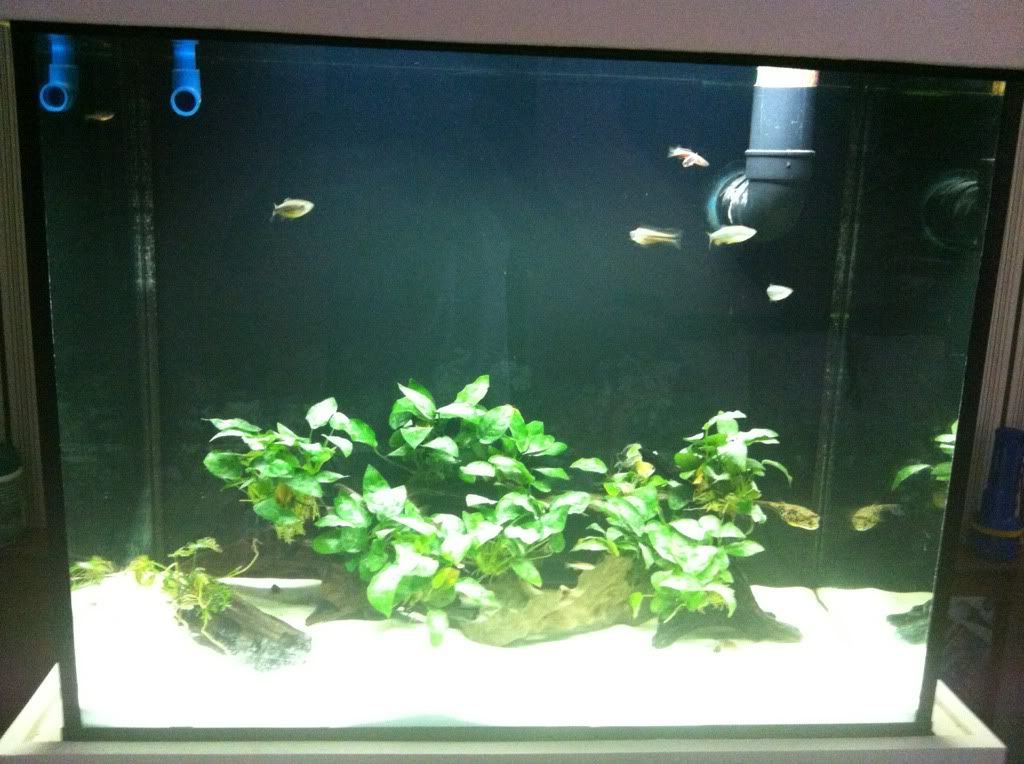
Pacing is often a sign of boredom, it could be the tank is too small, it could be lack of interesting decor. Do you have a full tank shot we could see?
Re: What are the growth rate of MBU puffers?
Posted: Fri Jun 21, 2013 5:09 am
by RTR
Pacing can also simply be exercise, which healthy hunter-predator fish do require. Factors to think about include tank size, available current, and visual complexity of the tank set-up.
Re: What are the growth rate of MBU puffers?
Posted: Fri Jun 21, 2013 10:56 am
by wahoosotto
bertie 83 wrote:Pacing is often a sign of boredom, it could be the tank is too small, it could be lack of interesting decor. Do you have a full tank shot we could see?
Here is the full tank shot and thats him/her in the right cOrner. I dont think the tank is small for her yet.
http://i124.photobucket.com/albums/p15/ ... 629d43.jpg
Re: What are the growth rate of MBU puffers?
Posted: Fri Jun 21, 2013 10:58 am
by wahoosotto
RTR wrote:Pacing can also simply be exercise, which healthy hunter-predator fish do require. Factors to think about include tank size, available current, and visual complexity of the tank set-up.
Shoul i rearrange the set up of the wood and just put a cave at the center?