Page 2 of 3
Re: mbu questions
Posted: Tue Sep 18, 2012 10:42 am
by bertie 83
Not necessarily, humans who breath large amounts of toxins would not live as long as those who don't. Also any fish that can be trained must have feelings like a human or a dog. All my tanks are kept the same, be it puffer, shrimp, tetras etc and that is high water quality nitrates below 20ppm. However I think we may have to agree to disagree on this one.
Re: mbu questions
Posted: Tue Sep 18, 2012 10:57 am
by E78704
bertie 83 wrote:Not necessarily, humans who breath large amounts of toxins would not live as long as those who don't. Also any fish that can be trained must have feelings like a human or a dog. All my tanks are kept the same, be it puffer, shrimp, tetras etc and that is high water quality nitrates below 20ppm. However I think we may have to agree to disagree on this one.
I'm not disagreeing with you at all. If you read my entire post, it continues to state that currently, I cannot read any nitrates in my tank. The point I was making was that this fish (like most) is hardy and temporary swings in water quality are unlikely to harm them. At least in my experience.
Regaring the "feelings"-thing, I couldn't comment on that. I can tell you that our Mbu appears to recognize me and my wife and also appears to watch TV (LOL) at times but I would not go so far as to say he is smart as the dog. For example, the dog realizes when he has done something wrong and can make a decision to not do that action in the future. The puffer? Nope. He gets excited when there is food and takes an interest in some aspects of his environment (both inside the tank and out...) but I would not characterize that as "emotion". More, "conditioned response". For example, I keep snakes, which definitely do not have feelings, yet develop the same conditioned repsonses to food being offered, etc. In other words, I don't find Mbu to be necessarily any smarter than the next fish but they definitely are more boisterous and responsive in their behavior. But, so do some of his cichlid tankmates, just on a much more minor scale.
Just my 2-cents.
Re: mbu questions
Posted: Tue Sep 18, 2012 3:23 pm
by Pufferpunk
I'd love to see the pics of your tank & puffer but the links aren't working for me. are you linking to a host photo site?
Re: mbu questions
Posted: Tue Sep 18, 2012 3:32 pm
by E78704
Pufferpunk wrote:I'd love to see the pics of your tank & puffer but the links aren't working for me. are you linking to a host photo site?
Yes, Photobucket. I am seeing them with no problem on this end, by the way. Are you on a mobile device?
Re: mbu questions
Posted: Tue Sep 18, 2012 4:08 pm
by bertie 83
The pics show up on my iPhone
Re: mbu questions
Posted: Tue Sep 18, 2012 11:43 pm
by Pufferpunk
I can see them now.
Re: mbu questions
Posted: Wed Sep 19, 2012 3:06 am
by sgtmyers88
Oh my... what a large and beautiful puffer you got there!
Re: mbu questions
Posted: Wed Sep 19, 2012 11:00 am
by E78704
Thanks, we really enjoy him. Before we bought him, I tried repeatedly to talk my wife out of getting one. "Honey, they get too big, eat too much, blah, blah, blah...". She was insistent, though, and so it began. I will be the first to say that Mbu are not for everyone. In fact, not for most folks. However, we had the room and resources to get him set up right and to be honest, like I mentioned earlier, his tank is actually a lot less work than reef or live plant tanks I have owned in the past. He's pretty much one of the family by now.
Re: mbu questions
Posted: Wed Sep 19, 2012 11:59 am
by RTR
First off, the fish pictured by E78704 above is nowhere near 30" TL. But it does appear at that time to be normal and to have near-normal color and configuration at this young age/size. The caudal fin border should have more color, but that can be a mood thing.
Second, the statements made by E78704 on the harmlessness of nitrate ion at 100ppm are absolutely false. Nitrate is used as our only simple hobby-test-kit single measure of pollution in general are correct. Nitrate at at high levels is toxic to many life forms, including humans and many fish. These, by the way, are two separate and distinct topics. That fact the above poster totally ignores. Nitrate toxicity in water is a laboratory measure, with varied concentrations of nitrate ion in standard and defined water solutions without all the thousands of pollutants found in even well-managed fish tanks. All semi-closed systems(1*) routinely used by hobbyists. Lab measures do confirm nitrate-alone toxicity. Those data however have only remote comparability to fish tanks, where we cannot separate the toxicities of all the other dissolved materials not found in enhanced levels in potable water. The dissolved organic compounds, a.k.a. "DOCs", are major pollutants which can be and frequently are quite stable materials in semi-closed systems. 1* "Semi-closed systems" are tanks maintained by periodic partial water changes. These are standard hobby practice. They can be compared to "Closed Systems" (systems without water changes at all (to date none have been successful) or to "Flow-through Systems" with constant water input and overflow (these can and do work if properly operated).
Additionally, the required materials, frequently simple mineral ions such as potassium, calcium, magnesium, and sodium among many others including simple inorganic ions such as carbonate/bicarbonate will over time increase or decrease far outside their original ranges. Even those simple ions can markedly affect the "health" of the original tank water. Those materials also affect the health of the system and its inhabitants. Many fish - including both Cichlids and puffers among others - may adapt and survive in water which would and will kill new introductions quickly. That pretty much defines Old Tank Syndrome, OTS. The water is survivable with long and slow adaptation, but the contained fish cannot be considered healthy or breedable or "normal". In extreme cases, even nitrification will be negatively affected.
Excessive nitrate levels therefore are symptoms of excessively eutrophic water in fish tanks. All mature fish tanks should be considered eutrophic (the formal term for polluted) having more and different life forms that would "potable" water, the formal term for water suitable for humans to drink without danger to their health. It should always be remembered that no mature semi-closed fish tank meets that standard. But not all mature tanks are equal. Many are kept quite healthily for the fish housed there. That is accomplished by maintaining water parameters as closely as possible or practical to the original, with low nitrates and closely comparable simple mineral ions as well. This is most simply managed by controlling stocking to levels sustainable with routine water changes at sufficient volumes to maintain comparability with the original water set up in the tank.
Excessive or inappropriate feeding is a common source of pollution. FW and BW puffers trend to be carnivorous (they are meat eaters). Marine and reef puffers tend to be more omnivorous (they eat both plant/algae and meat). I am unaware of any that are pure or primarily herbivores (critters that eat mainly plants/algae). Algae as a food source is not totally without good proteins, microscopic and small inverts are consumed with the plant matter and provide extra and possibly required proteins and minerals). It is absurd to compare a carnivorous puffer with a sucker-mouth catfish (even though some few of those are micro-carnivores) as most of that family eat very low-nutrition foods, while pure carnivores eat highly concentrated foods, relying on their prey for needed nutrients from plant matter).
Also do not be suckered in by specious estimates of costs by being given the price of one food item. All large scale hobbyists know, or should know, the long-term major cost of operating of a few thousand gallons of fish tanks is and will remain to be the power costs of operation. That has been true for quite some time and will continue to increase.
Tank size is easy. The adequate tank for any given fish is one which allows the specimen to turn around easily without touching the front or back of the tank, and with a width sufficient to swim for multiple body lengths (Note: two+ body lengths is not several). For schooling fish, ten or more body lengths is good. For singletons, four would be minimum with more preferred. More would be better, but $$$. For large cross-section fish such as T. mbu, tank-top baffles/splash guards are needed - they do throw bow waves like a nuclear sub.
Re: mbu questions
Posted: Wed Sep 19, 2012 12:53 pm
by E78704
RTR, this photo was taken almost one year ago...
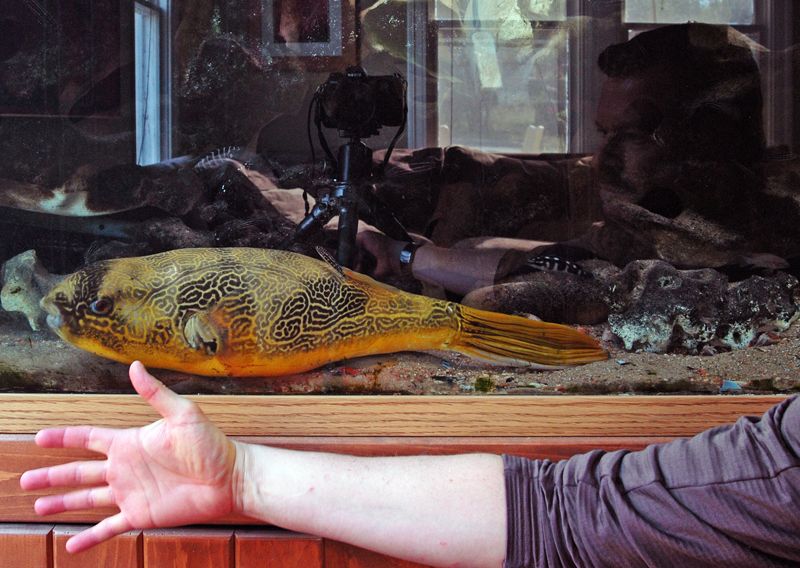
...he was 23" at that time and is today, as I stated earlier, between 26"-27". Possibly, you are not used to the scale of 6'x3' tank. I can tell you that even though it is not that much bigger, by volume, it looks twice as big to me as say, a 240G. The depth is the big difference.
Regarding your comments on water chemistry, tank size, et al, I don't have a reply (if you were looking for one...) except to say what I have already said several times, which is basically,
"OK, and?...". Mbu are a fish, just like any other fish and based on my experience, they are actually one of the less sensitive species. Certainly less sensitive than Discus or some other species I have kept in the past. If a person wants to try to find reasons to paint the picture that I am somehow doing something "incorrectly" (and I still don't really know how you quantify that...), then I have no response for them, because what it really boils down to is a matter of opinion and I have no interest in trying to change anyone's mind or tell them what to think/do. For example, you seem pretty fixated on the position that Mbu don't belong in captivity. And I have no problem with that except to ask the question,
"Are you ignoring facts by taking a certain position?". Because I have a lot of facts to dispute many statements about what Mbu actually "require" in captivity. At least statements often bantered about on internet forums.
Again, I can only go with my experience and my experience is that the tank size I described is viable and that commonly available filtration and heating equipment is totally suitable for keeping Mbu. Anyone, yourself included, is more than welcome to visit my house any time and see the fish and setup firsthand, if you don't "believe my methodology", LOL.
Re: mbu questions
Posted: Wed Sep 19, 2012 1:34 pm
by E78704
I'm going to amend the size I previously listed for our Mbu. I previously stated 26"-27". Just ran downstairs and snuck up on him with the measuring tape and got 25" (must've taken that earlier measurement right after he had eaten. Ha!...).
So, he has grown approx. 2" in the last year and, to my eye, has really slowed down during that period. At least compared to when he was younger. I'm going to go out on a limb and say that he is pretty much adult size, with slow growth to follow. I have read about "the size" for Mbu being 36" but would really like to see a photo of such a fish. I'm pretty good judge of size on these guys and can say that I have seen lots of them in 20"-range but only one I would put near 30". I feel like 30" is more likely the "real" size for these guys.
Re: mbu questions
Posted: Wed Sep 19, 2012 3:37 pm
by Fahaka Fakka
thanks E78704 for sharing hands-on experiences and great photos!
Re: mbu questions
Posted: Wed Sep 19, 2012 4:21 pm
by E78704
Fahaka Fakka wrote:thanks E78704 for sharing hands-on experiences and great photos!
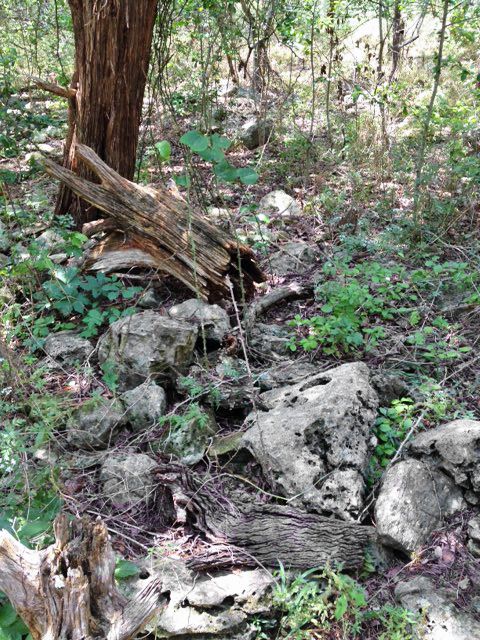
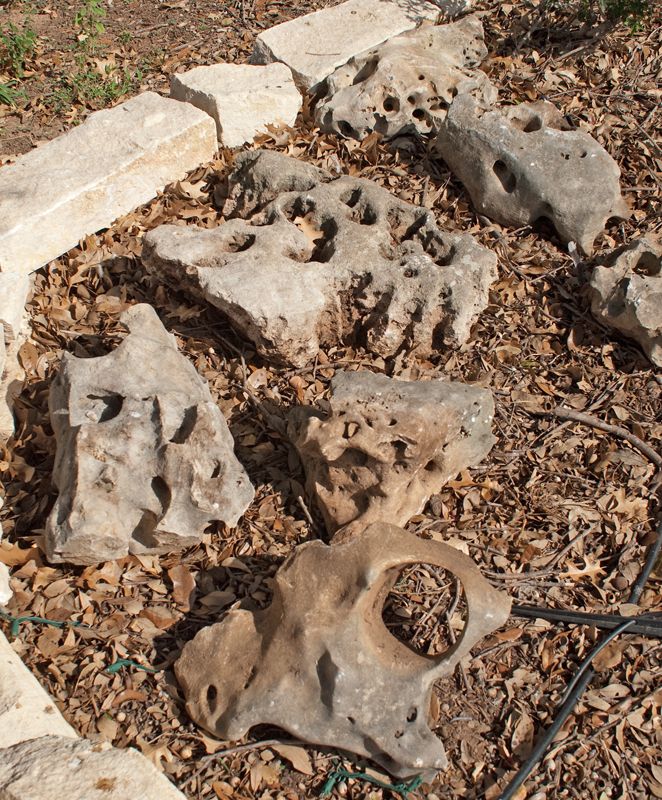
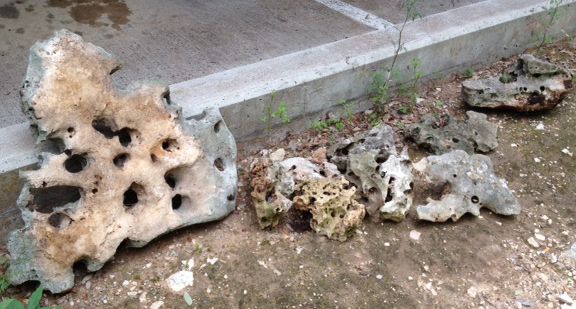
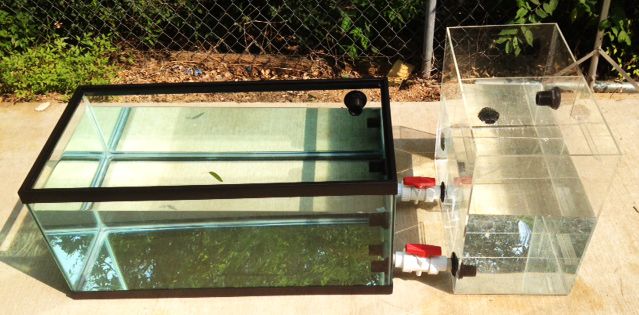
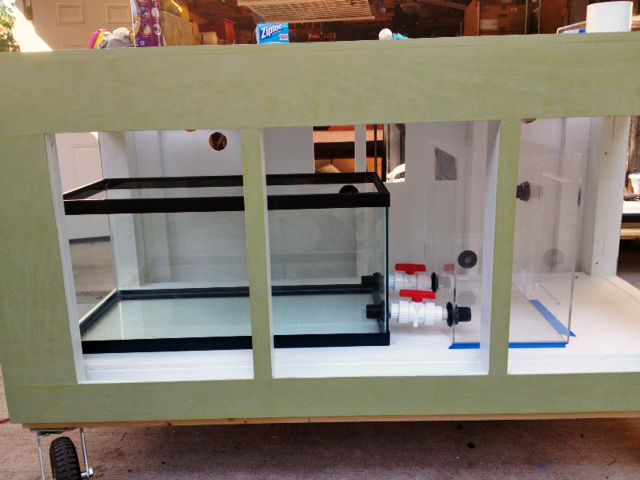
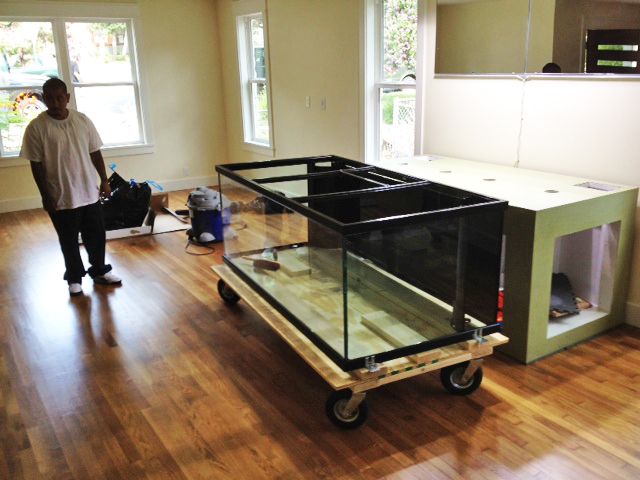
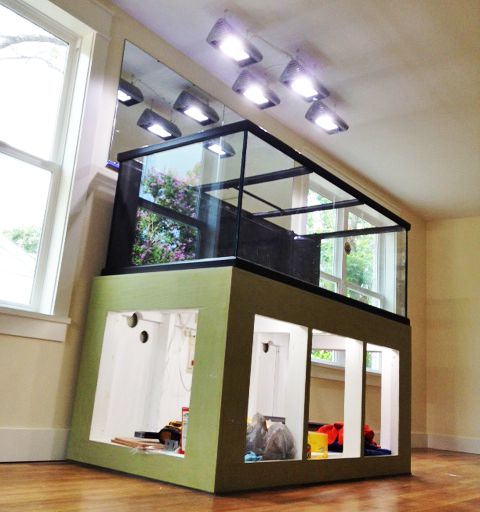
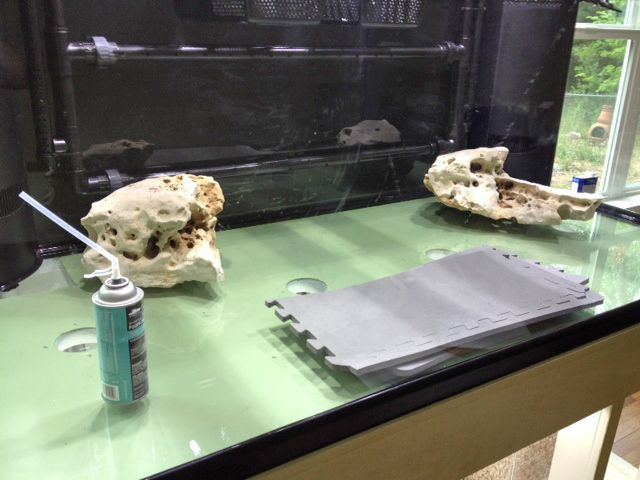
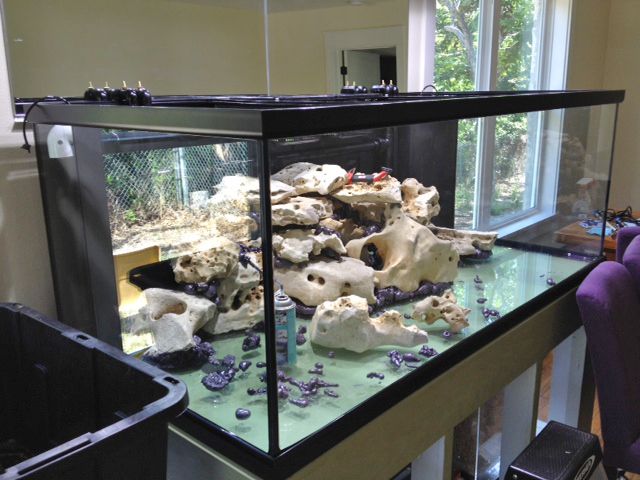
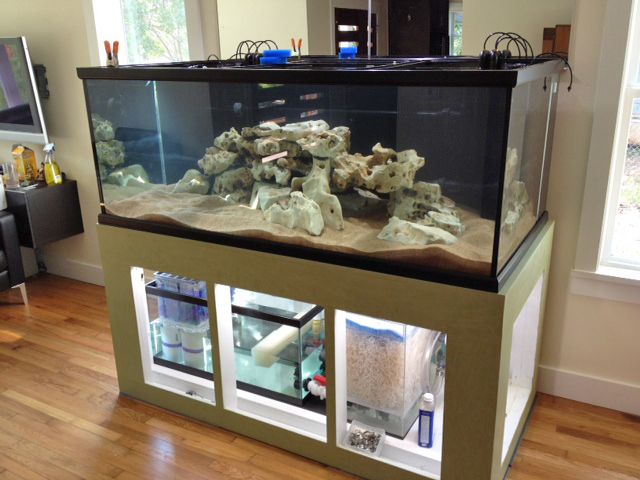
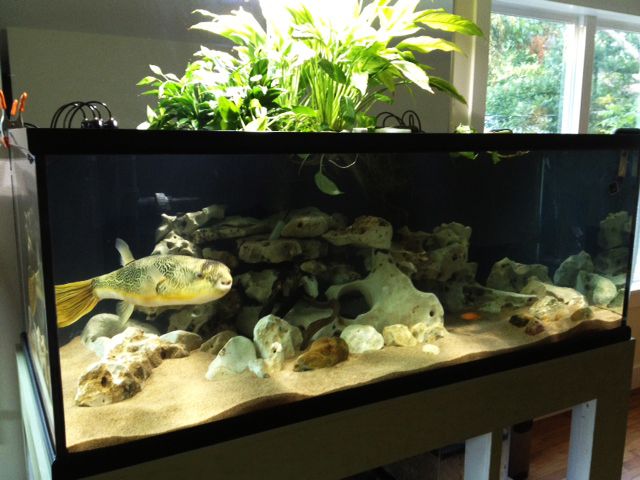
Thanks, my pleasure. I got a message from another member, asking about the back story, tank setup, etc. To make a long story short, we raised this guy in 125G up until about a year ago. We then moved out of our house while it was being remodeled, part of the remodel being accomodation for the new 300G aquarium. Here are some photos, in somewhat chronological order...
Rocks I collected for the tank...
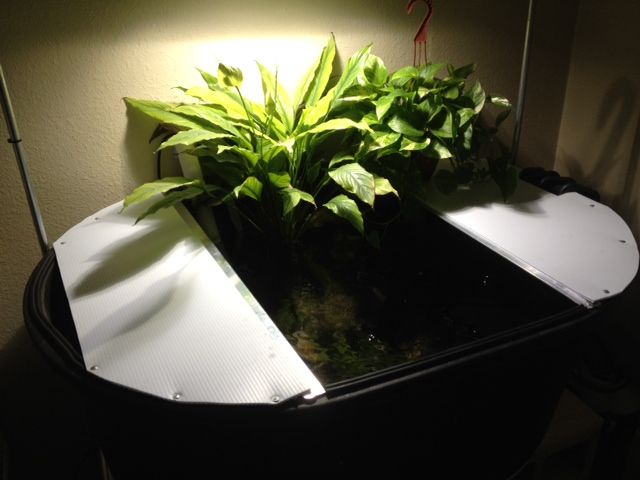
His temporary home, a 150G stock tank, while we were in the apartment and the remodel was happening...

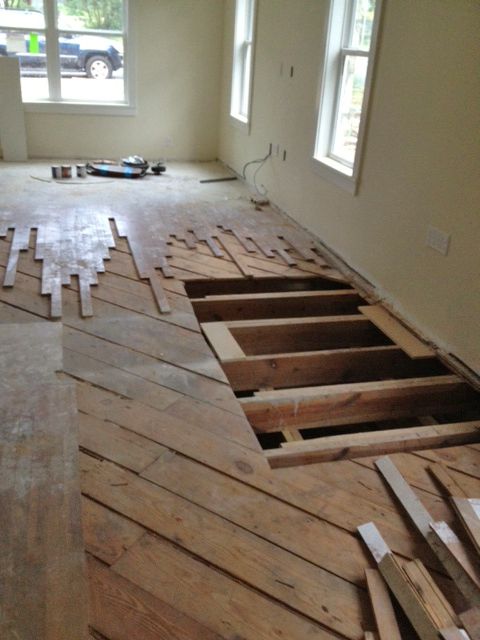
Back at the house, floor cut out so that we could pour the concrete slab which is needed to reinfoce the piers and beams...
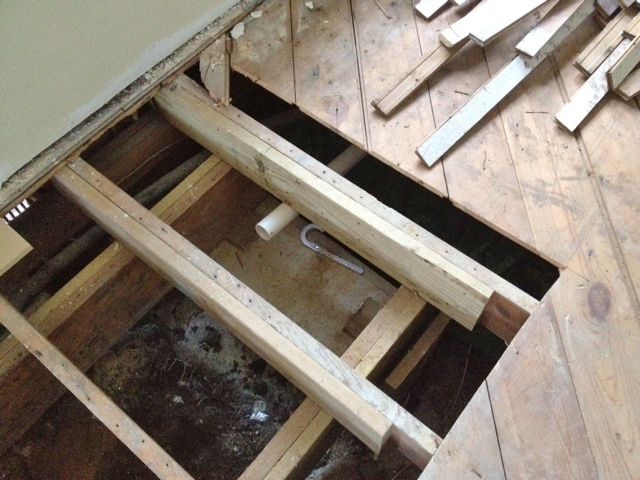
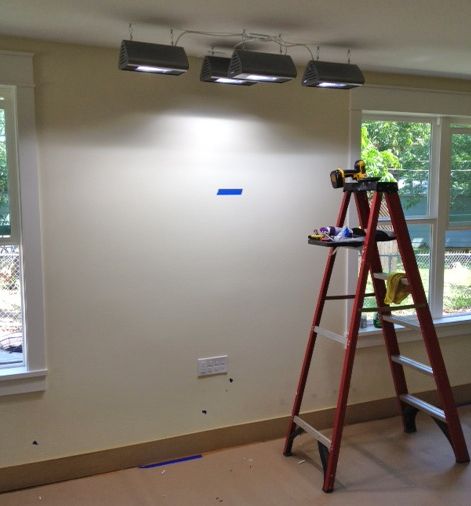
Various levels of progress...

Re: mbu questions
Posted: Wed Sep 19, 2012 4:39 pm
by bertie 83
Without wanting to sound like a pig or argumentative. But do you think we rarely see 36"+ mbu's because not many people keep them in massively massive huge tanks in the order of the thousand gallons we recommend, it could be due to slight stunting etc. like I say I'm not trying to pick an argument or sound harsh. Just my little thoughts lol.
Re: mbu questions
Posted: Wed Sep 19, 2012 5:11 pm
by E78704
bertie 83 wrote:Without wanting to sound like a pig or argumentative. But do you think we rarely see 36"+ mbu's because not many people keep them in massively massive huge tanks in the order of the thousand gallons we recommend, it could be due to slight stunting etc. like I say I'm not trying to pick an argument or sound harsh. Just my little thoughts lol.
I don't think you're trying to start argument at all and that's an interesting question. My
personal opinion is that Mbu don't get 36". At least not for purposes of our discussion. I have seen probably every photo posted on the web of either a captive or wild Mbu (or at least the same photos we have all seen by searching Google...) and I honestly cannot say that I have seen one that is 36" long. In fact, not even close to 36 inches. 30"? Maybe... I'm not saying it's not possible, just saying that I will believe it when I see it. Plenty in the 20"+ range, but that's pretty much it. I think the whole "36-inch"-thing was just some arbitrary number that, like lots of things, got bantered around the interwebs back in the beginning, and now, everyone just runs with it.
Regarding the stunting-thing, possible but not likely. At least not in my opinion. I know of one guy on the Monster forum that keeps his Mbu in a several thousand-gallon tank, and it is not necessarily bigger than the range we are talking about, above. In my experience, chronic poor diet will stunt fish quicker and more profoundly than a tank which is too small. Plus, the fact that mine has pretty much stopped growing at the 25"-mark says something to me. Obviously, we need to take into account genetic variability and so on but if, for example, we were still growing like he was when he was a year old, I would say,
"Yeah, 36 inches, no problem". I just don't see it. Or at least not in the next 5-10 years of his life
Just my 2-cents.